




Is Collecting Anime as an Adult Normal? Yes, and Here's Why

Someone told you it's childish. Maybe a coworker. Maybe a date. You smiled, changed the subject, and went home to the shelf that makes you happier than anything in their apartment.
You're not alone in that experience. Adult anime collectors hear some version of that comment constantly, and most of them have stopped explaining themselves. They don't need to. The adult anime collection market is one of the fastest-growing segments in consumer goods right now, and the psychology behind collecting, actually collecting anything deliberately, turns out to be one of the healthiest hobbies a person can have.
This post isn't about defending the hobby. It's about understanding it, so the next time someone raises an eyebrow, you either have the words or you simply don't care.
The Numbers Don't Lie: Adults Are the Market
The global anime merchandise market was valued at approximately $31 billion in 2023, and it's projected to pass $60 billion by 2032. That number doesn't come from teenagers asking parents for birthday presents. According to a 2023 survey by the Anime News Network, the average age of a self-identified anime collector in the United States is 28. The largest buying demographic for high-end figures and art objects is adults aged 25 to 44.
Crunchyroll's 2024 fan report found that 78% of their active subscribers are adults with their own income. Funimation's retail data shows that collectors who spend more than $200 per year on merchandise skew toward the 28 to 40 age bracket. These aren't fringe numbers. Adults are not a niche segment of anime fandom. They're the core market.
The perception that anime merchandise is "for kids" is a holdover from the 1990s, when Western distribution leaned heavily on Saturday morning programming. The actual audience in Japan, where the industry originated, was always multi-generational. Manga like Berserk, Ghost in the Shell, and Akira were aimed at adults from their first publication. The Western market just caught up slowly.

Understanding the market doesn't just validate the hobby. It changes how you talk about it. You're not a grown adult who still likes cartoons. You're part of a global community that spends tens of billions of dollars a year on art, craftsmanship, and the things that genuinely move them.
Why We Collect: The Psychology Behind It
Researchers who study collecting behavior have identified a consistent set of motivations, and none of them are embarrassing. A 2021 study published in Psychology & Marketing found that collectors report higher levels of life satisfaction than non-collectors in the same income bracket. The act of intentional, interest-driven acquisition turns out to be psychologically meaningful in ways that passive consumption is not.
Nostalgia as anchor. Anime frequently represents a specific chapter of someone's life: a season of childhood freedom, a friendship that shaped them, a story that arrived at exactly the right time. Collecting is a way of keeping that chapter accessible. It's not about refusing to grow up. It's about not abandoning the parts of yourself that were formed during formative years. Psychologists call this "self-continuity," the maintenance of a coherent identity across time.
Identity and curation. A collection is a self-portrait. What you choose to display, and how you display it, communicates something specific about your values, your aesthetic sensibility, and the stories that matter to you. Interior designers have a term for this: "curated personality." Collectors who build intentional displays aren't decorating a room. They're editing a version of themselves for anyone who walks through the door.
Stress relief through mastery. Collecting gives you a domain where you have genuine expertise. You know which version of a figure is the original, which studio produced a limited edition, which colorway is rare. That mastery is satisfying in a way that most knowledge-work jobs aren't. It's yours. No one can restructure it or delete it in a system update.

The Difference Between Hoarding and Curating
There's a real distinction between accumulating anime merchandise and building a collection, and it's worth making explicitly. Hoarding is reactive. Curating is intentional. One is driven by availability and impulse; the other is driven by meaning and aesthetic judgment. Most collectors who feel embarrassed about their collection are actually reacting to the hoarding version, even if that's not what they have.
| Hoarding Behavior | Curating Behavior |
|---|---|
| Buy everything that drops | Only acquire pieces with personal meaning |
| Display driven by quantity | Display driven by visual harmony |
| No editing, nothing gets removed | Regular editing: if it doesn't belong, it goes |
| Random placement, visual noise | Intentional placement, breathing room |
| Feels like clutter even to the owner | Feels like a space that represents you |
| Driven by FOMO and availability | Driven by taste and restraint |
The shift from hoarding to curating often happens naturally as collectors mature. They start buying less and choosing better. They clear out pieces that no longer feel right. They think about light, about spacing, about how objects relate to each other. At that point, collecting becomes an art practice, and no one questions whether artists should be allowed to practice their craft into adulthood.
For a practical guide on taking that step, this breakdown on displaying anime collections as an adult covers the specific decisions that separate visual noise from a display you're genuinely proud to show people.
How to Display a Collection That Looks Grown-Up
The question of whether a collection "looks childish" is almost always a question of display, not content. The same figures on a cluttered desk with mismatched lighting look completely different on a clean shelf with deliberate placement and warm ambient light. Presentation is everything. Interior designers know this; collectors are learning it.
Less is more. The single most effective upgrade most collectors can make is removing pieces, not adding them. If you have 40 figures on a shelf, pick 10 that genuinely represent your taste. Give them space. Space communicates confidence and intentionality. Density communicates accumulation.
Consistent lighting is the multiplier. Cold, overhead fluorescents flatten every object in a room. Warm ambient light in the 2700K to 3000K range makes even modest objects look deliberate and considered. This is why gallery-quality displays use directed warm light. The object hasn't changed; the context around it has. A piece that sits in quality warm light signals to every visitor that someone thought carefully about this space.
One visual anchor per shelf. Identify the single strongest piece on each shelf and build everything else around it. Everything else should support, not compete. Repeating textures, consistent height lines, and one accent element per zone are the structural principles that make a collection look curated rather than accumulated. If you want to go deeper on the lighting side specifically, this display guide covers exactly how to use light as a design tool in a collector's space.
Some collectors, particularly those who want something that bridges anime aesthetics and clean home decor, find that pieces designed for ambient warmth rather than franchise recognition become the anchors that tie a display together. The Sunflower Glow Resin Lamp is a piece that regularly appears in room setups where the owner wants warm, art-quality light without a character silhouette front and center. It's a conversation starter without announcing its category.

For collectors who want something more clearly floral and art-forward, the Royal Rose Harmony Resin Lamp at $124.95 occupies a similar role: it reads as sculptural art to anyone who doesn't know the product, and as a carefully chosen accent to anyone who does. These are the kinds of pieces that make non-collectors say "where did you get that?" without the conversation pivoting to whether you're too old for anime.

For desk-specific setup ideas, this guide on anime desk setups in 2026 covers how working adults are integrating anime aesthetics into spaces that also need to function as actual workstations.
What Non-Collectors Don't Understand
The people who question adult collectors are almost always people who don't collect anything. Not wine, not books, not vintage records, not anything. What they're reacting to is the anime-specific framing, because anime carries a cultural stigma in Western markets that Scotch whisky or vinyl records don't. But the psychology of collecting is identical across all categories. The difference is entirely aesthetic and social, not behavioral or psychological.
What they don't understand is that a well-chosen piece on a shelf isn't decoration in the way a throw pillow is decoration. It's a marker. It says: this story mattered to me. This character represented something I needed at a particular point in my life. This franchise shaped the way I think about courage, or grief, or what it means to protect the people you love. That's not childish. That's the kind of meaning most people spend their entire lives trying to build into their physical spaces.
Collectors who share their space with partners or housemates who don't collect often find that framing the collection as art, showing how it's curated rather than accumulated, changes the entire conversation. This post on sharing an anime hobby with a partner covers exactly that negotiation in practical terms.

There's also a practical reality non-collectors miss: good collections accrue social capital in ways purely utilitarian decor doesn't. A first-edition figure, a signed print, a handcrafted piece from a workshop that made only a few hundred of them, these become the things guests remember. They become stories. Most people's apartments don't have anything in them that requires a story. Yours does. That's not a liability. That's an asset.
Frequently Asked Questions
Featured Resin Lamps
Handcrafted with care, each one unique
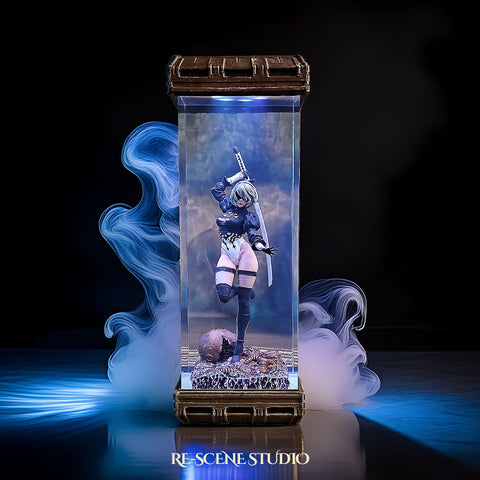
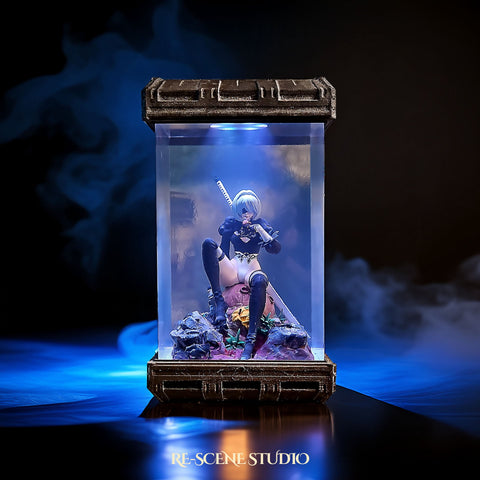
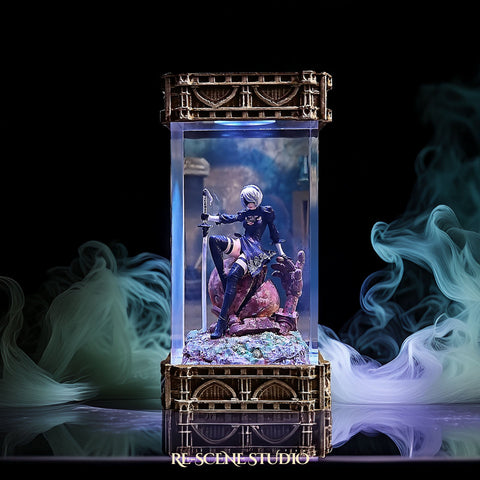
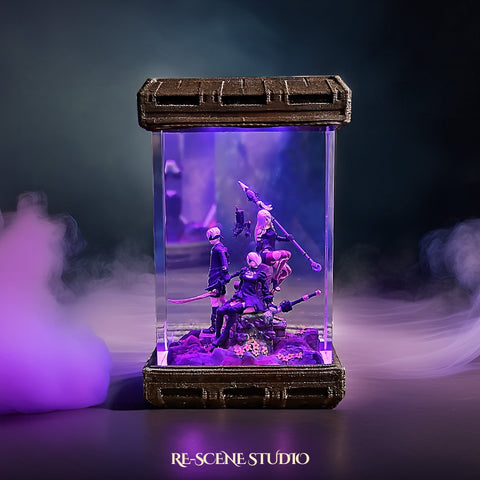
Every lamp we create carries a piece of our heart: a small universe of light, resin, and imagination, handcrafted in our workshop for someone across the world who shares our love for these stories.