

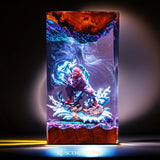





How to Share Your Anime Hobby with a Non-Fan Partner

You love anime. Your partner does not. Maybe they think it is childish.
Maybe they cringe at the fan service. Maybe they just cannot get past the "cartoons are for adults?" barrier. One Quora user shared a situation many fans will recognize: "My boyfriend hates anime to the point where he does not let me watch it." That level of friction is more common than you think.
This is not really about anime. It is about feeling like a part of your identity is being dismissed by the person closest to you.
The embarrassment of hiding what you watch. The frustration of wanting to share something meaningful and being shut down before you start. If your partner has ever rolled their eyes at your hobby, this guide is for you.
The goal here is not to convert your partner into an otaku. It is to bridge the gap between dismissal and respect.
Sometimes that leads to watching anime together. Sometimes it just means they stop making fun of your shelf. Both outcomes are wins.
Why Some Partners Resist Anime
Before you try to share anime with your partner, it helps to understand why they resist it. The reasons are usually not about anime itself. They are about preconceptions built over years of cultural messaging that cartoons are for children.
The "cartoons are for kids" assumption is the most common barrier. In many Western households, animation stopped being acceptable around age 12. Your partner may have internalized this without ever questioning it.
They are not judging you specifically. They are repeating a cultural script they absorbed as a kid. Understanding this makes it easier to respond with patience instead of defensiveness.
Fan service anxiety is another real concern. A partner who has seen clips of overly sexualized anime characters may assume the entire medium is like that.
This is a legitimate worry, and dismissing it will backfire. Acknowledge it directly: yes, some anime has fan service, and no, that is not what you are asking them to watch. Being honest about the medium's range builds trust.
Sometimes the resistance is about time and attention. Your partner sees you watching hours of anime and feels left out or deprioritized. This is not about anime at all.
It is about quality time. If this is the core issue, the solution is not converting them to anime. It is rebalancing how you spend time together.
What Backfires Every Time
Before we talk about what works, let us be honest about what fails. These are the most common mistakes anime fans make when trying to share their hobby with a reluctant partner. If you have tried any of these and failed, you are not alone.
The Marathon Trap
Sitting your partner down for a 12-episode binge of your favorite show is a recipe for resentment. Even if the show is incredible, forcing someone to commit 4 to 6 hours to something they are already skeptical about feels like an ambush.
Start with a single movie or 1 to 2 episodes maximum. Give them an exit ramp. If they want more, they will ask.
Starting with Niche Shows
Your personal favorite might be a complex isekai with 200 episodes of lore. That is not a gateway show. Starting someone with a series that requires context, knowledge of anime tropes, or tolerance for genre conventions they have never encountered is setting both of you up for frustration. Save your deep cuts for later.
Getting Defensive
When your partner says something dismissive about anime, the instinct is to argue. "You just do not understand it" or "It is not for kids" might be true, but defensive responses create a debate instead of a conversation.
Debates have winners and losers. Conversations have understanding. You want the second one.
The Gateway Strategy: Match Anime to Their Taste
The most effective approach is embarrassingly simple. Find out what your partner already likes, then pick an anime that matches that exact taste. You are not asking them to try something new. You are showing them something familiar in a different format.
If They Like Marvel or DC
Start with My Hero Academia. The superhero framework is immediately familiar. Powers, villains, teams, origin stories.
Your partner already understands and enjoys this structure. They just have not seen it animated in a Japanese style before. The first two episodes establish the world quickly enough to hook someone who already loves superhero stories.
If They Like Thrillers and Crime Dramas
Death Note is the gold standard gateway for thriller fans. It is a psychological chess match between two geniuses with zero fan service, no filler, and a pace that respects the viewer's intelligence. If your partner watches Breaking Bad, Mindhunter, or Sherlock, Death Note will click within the first episode.
If They Like Romance or Emotional Stories
Your Name (Kimi no Na wa) is a 106-minute movie that has made millions of non-anime fans cry. It is visually stunning, emotionally powerful, and tells a complete story without requiring any anime knowledge. A Silent Voice is another strong option for partners who connect with emotional depth. Both films stand entirely on their own as cinema.
If They Like Fantasy or Adventure
Studio Ghibli films are the universal gateway. Spirited Away, Howl's Moving Castle, and Princess Mononoke are widely regarded as masterpieces of animation regardless of genre.
They have been praised by Western film critics, won Academy Awards, and are screened in art house theaters worldwide. These films do not feel like "anime" to a skeptic. They feel like art.
The Decor Bridge: When Art Speaks Louder Than Arguments
Sometimes the best way to share your hobby is not through watching anime together at all. It is through your living space. This is what collectors call the "decor bridge," and it works because it reframes anime from "a thing you watch" to "art that belongs in our home."
Studio Ghibli art prints, for example, are widely appreciated as beautiful regardless of whether the viewer has seen the films. A Totoro lamp on a bookshelf looks whimsical and warm, not "nerdy." A Howl's Moving Castle piece looks like fantasy art that could hang in any gallery. The aesthetic quality of these items does the persuading for you.

The decor bridge works because it does not demand anything from your partner. They do not have to watch, engage, or even care about the source material. They just need to agree that the piece looks good in the room.
Once anime-adjacent art becomes part of your shared space, the cultural barrier starts dissolving naturally. Your partner sees it every day. They might ask about the character. That conversation happens on their terms, which is exactly how curiosity works.
Respecting Boundaries: The Part Nobody Wants to Hear
Here is the honest part. Your partner might try anime, genuinely give it a fair shot, and still not like it.
That is a completely valid outcome. Not everyone connects with every medium. You probably do not love everything your partner is into either.
What matters is the journey from dismissal to respect. If your partner goes from "anime is stupid" to "it is not for me, but I get why you like it," that is a massive win.
They do not need to become a fan. They need to stop treating your hobby as something to be ashamed of. That is the real goal.
If your partner refuses to even try, or continues to mock your hobby after you have communicated how much it means to you, that is a relationship conversation, not an anime one. A partner who respects you will respect the things that bring you joy, even if they do not share the enthusiasm. The bar is not "love what I love." The bar is "do not make me feel bad for loving it."
Success Stories: How Real Couples Found Common Ground
The anime community is full of stories where skeptical partners eventually came around. The common thread is almost always patience and the right starting point. One Reddit user in r/anime shared that their partner refused anime for two years until they watched Spirited Away together on a rainy Sunday. "She cried at the end and asked what we should watch next."
Another common path is through cooking or travel content. Anime like Food Wars (skip the ecchi scenes) or travel-focused series can connect with partners who love food or culture. The anime becomes a vehicle for something they already care about rather than an entirely foreign experience.
Some couples find middle ground through anime-adjacent content. Studio Ghibli soundtracks are beautiful background music.
Anime art books are coffee table conversation starters. Anime-inspired video games like Genshin Impact or Persona 5 blend gaming with anime aesthetics in a way that feels more accessible to non-fans. Not every bridge has to be "sit down and watch this show."
Frequently Asked Questions
Featured Resin Lamps
Handcrafted with care, each one unique
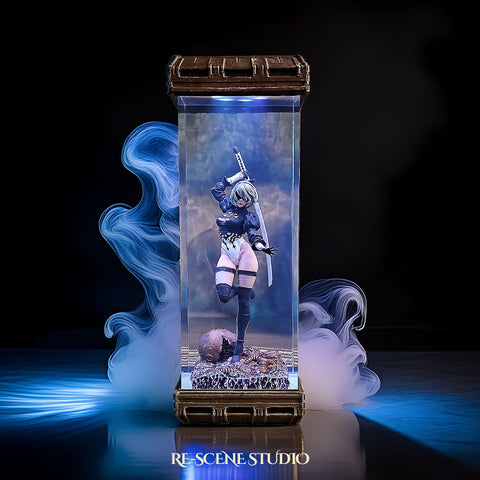
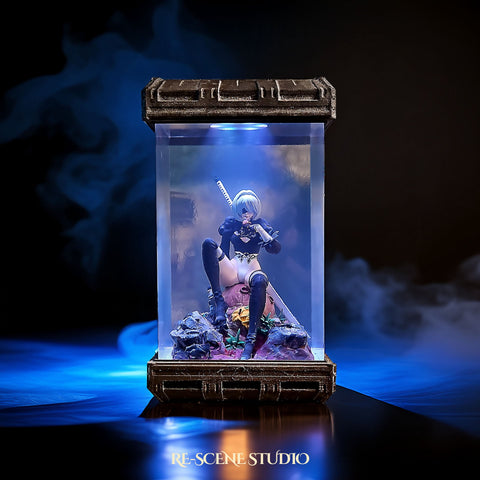
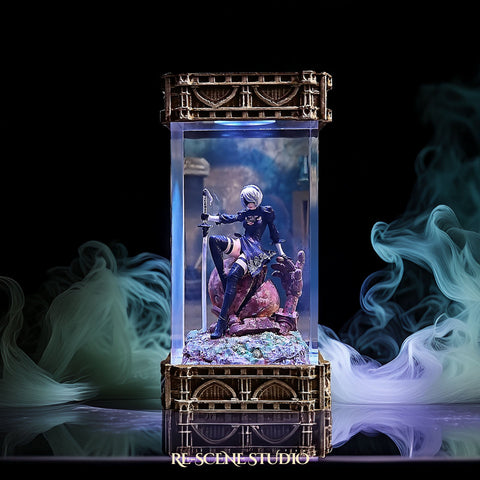
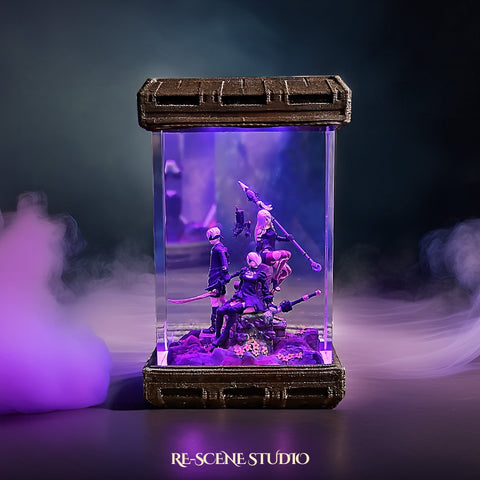
Every lamp we create carries a piece of our heart: a small universe of light, resin, and imagination, handcrafted in our workshop for someone across the world who shares our love for these stories.