


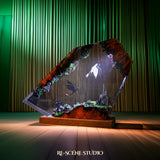




Resin vs Acrylic vs Glass: An Honest Material Comparison

You started shopping for a lamp and the same three materials keep showing up. Resin. Acrylic. Glass. The product photos look almost identical. The prices are wildly different. The marketing copy on every listing tells you exactly what makes its material the best, which is unhelpful when you are trying to decide which one actually belongs on your nightstand. So here is the honest resin vs acrylic lamp comparison, with glass thrown in, written by people who work with all three.
The short answer is that they are not interchangeable. Each material has a real strength, a real weakness, and a real best use case. The trick is matching the material to what you actually want from the lamp on your shelf. Spoiler: most buyers end up wanting one of the three for very specific reasons once they understand the differences.
This guide walks through the actual differences in clarity, weight, durability, safety, longevity, and cost. No marketing claims, no "best of all worlds" hand waving, just the trade-offs. By the end you will know exactly which material fits the lamp you actually want.
The Quick Take Before We Get Into the Details
If you only read one paragraph of this guide, here it is. Resin is the most versatile for art-style lamps with embedded figures, characters, or botanicals because it can be cast around almost anything in three dimensions. Acrylic is the lightest and the cheapest, and it works best for simple shapes and budget pieces where weight matters more than depth. Glass is the most premium feel and the most fragile, and it works best for clean modern minimal lamps where you want a hard, cool surface and a simple silhouette.
Now for the part that justifies that paragraph.
Material 1: Resin (Cured Epoxy)

Cured epoxy resin is what you get when you mix two reactive parts of liquid epoxy and let them chemically bond into a stable, glassy thermoset polymer. Once cured, it is one solid piece. It feels heavy in the hand for its size, slightly warmer to the touch than glass, and has the kind of clarity that almost looks artificially perfect under bright light.
The single biggest reason resin dominates handcrafted lamps is that it can be cast in stages around three-dimensional objects. A resin artisan can pour a base layer, set a sculpted figure or a preserved botanical inside, pour another layer, add another element, and continue building up depth. The finished lamp has visible interior layers and miniature scenes that you simply cannot achieve with acrylic or glass without specialized industrial equipment.
Quality resin is also remarkably stable. Indoors, away from direct sunlight, commercial-grade cured epoxy stays clear and bright for decades. We covered the longevity side of this in our complete care timeline for how long resin lamps last, and the short version is that the cured polymer body outlasts almost everything else on a typical shelf.
Where resin shines: Lamps with embedded characters, miniatures, preserved botanicals, layered scenes, and any artistic depth that needs three-dimensional composition. Also lamps that need to feel substantial and weighty.
Where resin struggles: Pure minimalist shapes where the material itself is meant to disappear. Resin always reads as a poured, layered material, which is a strength for art lamps and a weakness for "I want a bare cube of light" simplicity. Cheap resin from bargain sellers also yellows visibly within a year, which is why grade matters more here than for the other two materials.
Material 2: Acrylic (Plexiglass / PMMA)

Acrylic, sometimes sold under brand names like Plexiglass or technically called PMMA (polymethyl methacrylate), is a thermoplastic that comes from the factory as flat sheets, blocks, or pre-formed shapes. Unlike resin, it is not poured by an artisan. It is manufactured at scale in industrial extrusion lines and then cut, drilled, polished, or laser-etched into finished pieces.
The biggest practical advantage of acrylic is weight. A piece of acrylic the same size as a piece of resin weighs about half as much. This makes acrylic the natural choice for larger lamps, hanging fixtures, or anything where the buyer wants visual presence without dragging down a flimsy nightstand. It is also the cheapest of the three materials at the raw end, which is why budget shop lamps so often use it.
Acrylic also has a very specific optical property called edge-lit glow. When you push light into the side of an acrylic sheet, it travels along the inside and exits along any cut edge or etched line. This is the basis for those flat illuminated sign lamps with line-art designs etched into a clear panel. Resin cannot do this trick effectively. Glass can, but only in a much more expensive industrial process.
The catch is that acrylic does not handle complex three-dimensional embedding well. You cannot build layered miniature scenes inside a solid acrylic block the way you can with resin. It also scratches more easily than glass, develops tiny static-attracted dust films on the surface, and looks a little bit cheap in person if the polish is not perfect. This is not the material's fault, it is just what acrylic is. A good acrylic lamp uses the material for what it is good at and skips the things it cannot do.
Where acrylic shines: Edge-lit flat panel lamps, large lightweight pieces, modern minimal silhouettes, line-art designs, and budget pieces where light weight matters.
Where acrylic struggles: Three-dimensional embedded scenes, premium feel, scratch resistance, and any artistic depth that needs layered composition.
Material 3: Glass

Glass is the oldest material of the three and still the one that feels most premium in the hand. It is heavier than acrylic, slightly heavier than resin for the same size, cool to the touch, and has an unmistakable hardness when you tap it. The clarity of high-quality lead-free glass is unmatched. There is no slight tint, no plastic warmth, no surface that softens light at the edges. It is just light and glass.
The challenge with glass is that it is genuinely fragile. Not in a "be careful" way but in a "if a child knocks this off a high shelf it shatters into shards on a hardwood floor" way. The tradeoff for the premium look is that glass lamps live a more careful life than resin or acrylic, especially in homes with kids or pets.
Glass is also extremely difficult to shape into anything other than the standard forms a glassblower or kiln can produce. You will not find embedded figures, layered scenes, or character art inside a glass lamp because the material does not allow that kind of construction at consumer prices. What you get instead is clean modern silhouettes: spheres, cylinders, faceted forms, and minimalist geometric shapes. For some buyers that simplicity is exactly the point.
Cost-wise, quality glass lamps are usually the most expensive of the three for the same size, especially when you factor in the protective packaging required to ship glass safely.
Where glass shines: Premium minimalist lamps, simple geometric shapes, hard cool surface feel, and any room where the lamp is meant to look almost invisible against the light source.
Where glass struggles: Fragility, shipping cost, lack of three-dimensional artistic options, and homes with children or active pets.
Side-by-Side: The Honest Comparison Table
This is the comparison most product pages avoid. Here are all three materials lined up against the criteria that actually matter in real-world use.
| Criterion | Resin | Acrylic | Glass |
|---|---|---|---|
| Clarity (when new) | Very high (quality grade) / Cloudy (cheap grade) | High | Highest |
| Weight | Heavy for size | Light | Heavy |
| 3D embedded art | Excellent (the whole point) | Not possible at consumer prices | Not possible at consumer prices |
| Edge-lit glow | Limited | Excellent (its specialty) | Limited / industrial only |
| Scratch resistance | Good | Lower (visible on the surface) | Excellent |
| Drop survival | Best (chips but rarely shatters) | Good (can crack but not shatter) | Worst (shatters into shards) |
| Long-term yellowing | None on quality grade / Visible on cheap grade | Slight on long-term UV exposure | None ever |
| Premium feel in hand | Substantial, slightly warm | Light, plastic-like | Cool, hard, glassy |
| Typical price range | $50 to $250 | $15 to $80 | $80 to $350 |
| Best use | Art lamps with embedded scenes | Edge-lit flat panels, lightweight large pieces | Premium minimalist clean shapes |
Read this table once and you will see that none of the three is "the best." Each one wins a different row, and the row that matters most to you is the one that picks the material.
The Real Decision Framework
If you are still uncertain, here is the simple way most buyers should pick.
Pick resin if: You want a lamp with a character, scene, figure, or preserved botanical visible inside the body. You want the piece to feel substantial and artisanal. You are okay paying mid-range prices for handcrafted work. You have a stable shelf or nightstand where the lamp will live.
Pick acrylic if: You want a flat panel lamp with line-art etching, a large lightweight piece, or a budget-friendly option for a kid's room or starter setup. You care more about weight and price than premium feel.
Pick glass if: You want a clean modern minimalist look, premium feel, and a simple geometric shape. You do not have kids or pets that might knock things off shelves. You are fine paying a premium and accepting fragility.
The biggest mistake buyers make is picking acrylic when they actually wanted the depth and weight of resin, or picking resin when they actually wanted the minimalist simplicity of glass. Knowing the material's strengths up front saves the disappointment of receiving a lamp that does not match the mental picture you had.
Why Quality Within a Material Matters More Than the Material Itself
Here is the part most comparison guides miss. The grade of the material you buy matters more than which material it is. A cheap resin lamp from a marketplace can yellow within months. A cheap acrylic lamp can develop scratches the first time you wipe it. A cheap glass lamp can crack from the heat of a non-LED bulb. None of this is the material's fault. It is the maker's choice to use bargain inputs.
A quality resin lamp from a real workshop uses commercial-grade clear epoxy with stable pigments and a certified LED. A quality acrylic lamp uses cell-cast acrylic instead of cheap extruded sheet. A quality glass lamp uses lead-free borosilicate. The difference between a $19 resin lamp and a $59 resin lamp is not a markup. It is the same gap you would find between a $19 acrylic lamp and a $59 acrylic lamp from a respected maker.
If you want the full breakdown of where the cost difference actually goes, our handcrafted resin lamp pricing breakdown covers it line by line.

Safety Across All Three Materials
One last thing worth saying. Across all three materials, safety is overwhelmingly a function of the LED component, not the material body. Cured resin is chemically inert. Acrylic is inert in solid form. Glass is inert. None of the three off-gas, leach, or pose any chemical risk to a normal home environment.
The actual safety questions for any lamp in any material are about the wiring and the LED driver: are they certified, are they low-voltage, are they protected from short circuits? Those questions matter equally whether you buy resin, acrylic, or glass. We covered the certifications and red flags worth checking in our guide on whether resin lamps are safe and what certifications buyers should look for, and the same advice applies to any material.

Frequently Asked Questions
Featured Resin Lamps
Handcrafted with care, each one unique


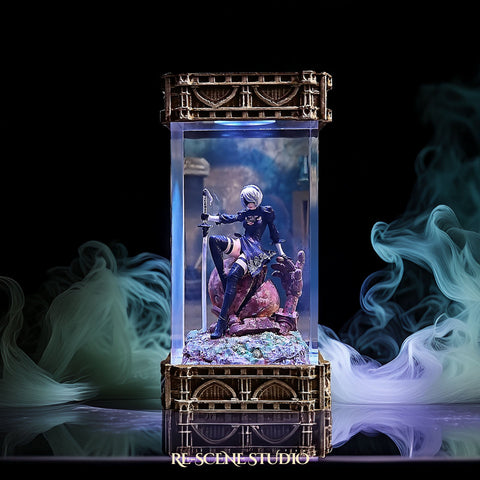
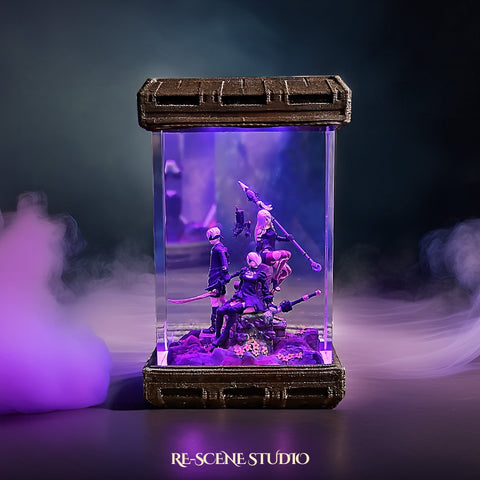
Every lamp we create carries a piece of our heart: a small universe of light, resin, and imagination, handcrafted in our workshop for someone across the world who shares our love for these stories.