



![[FATHER'S DAY] Ember Glow Ticket | $6.68 — Handcrafted Epoxy Resin LED Lamp | Unique Ambient Decor & Collector's Gift](http://rescenestudio.com/cdn/shop/files/Lucky_Star_Ticket_NYE_2026_c61361fc-ea06-4a31-8379-e16ed7d47902.jpg?v=1767177179&width=320)


Naruto vs Pain: Why One Fight Changed Anime Forever

Naruto vs Pain isn't just a fan-favorite fight. It's the moment that transformed Naruto Uzumaki from a promising underdog into a legitimate hero, the moment Naruto Shippuden proved it could compete with the greatest arcs in anime history, and the moment an entire generation of anime fans realized that a fight scene could make them cry.
The arc spans episodes 152 to 175 of Naruto Shippuden, aired in 2010, and it remains one of the most discussed, analyzed, and rewatched sequences in the medium. Here's why this fight matters far beyond the punches thrown, and why it still holds up over 15 years later.
The Setup: Why Konoha Was Unprepared
To understand why Pain's assault hit so hard, you need to know what Konoha was missing. Naruto wasn't in the village. He was training at Mount Myoboku, learning Sage Mode from the toads. Jiraiya, Naruto's mentor, was already dead. He had gone alone to investigate Pain in the Hidden Rain Village and never came back.
Jiraiya's death is the emotional foundation of the entire arc. He died gathering intelligence on Pain's abilities, information that would later save Naruto's life in the actual fight. But the cost was losing the one person who believed in Naruto before anyone else did. When Naruto learns of Jiraiya's death, his reaction isn't explosive rage. It's a quiet, crushing grief that remains one of the most emotionally honest moments in shonen anime.
Meanwhile, Pain arrives in Konoha with a single goal: capture the Nine-Tailed Fox sealed inside Naruto. He doesn't sneak in. He doesn't negotiate. He appears above the village and says, "This world shall know pain." Then he destroys everything.

The Six Paths of Pain: A New Kind of Anime Villain
Pain isn't one person. He's six reanimated corpses controlled remotely by Nagato, a former student of Jiraiya who was crippled during the Third Great Ninja War. Each "Path" has a different ability: one absorbs chakra, one summons animals, one reads minds, one repairs the others, one fires missiles from its body, and the Deva Path (the main one, using Yahiko's body) controls gravity.
What makes Pain brilliant as an antagonist isn't his power. It's that he's right. Nagato grew up in a war-torn country. His parents were killed by Leaf ninja. His best friend died. He experienced the exact suffering that Konoha's peace was built on. When he tells Naruto "you think you know pain? You know nothing," it's not empty villain talk. He's speaking from a lifetime of suffering that the "good guys" either caused or ignored.
This is what separates Pain from typical anime villains. He doesn't want power for its own sake. He wants the world to understand suffering so completely that it chooses peace out of fear. It's a twisted philosophy, but it comes from a genuine place. And when Naruto finally confronts him, he doesn't have a counterargument ready. He has to think.
The Fight Itself: Spectacle and Substance
The actual combat spans multiple episodes and goes through distinct phases that mirror Naruto's emotional state.
Phase 1: Sage Mode Naruto vs Six Paths
Naruto arrives at the destroyed village in Sage Mode: a power-up that enhances his speed, strength, and perception by harmonizing with natural energy. This is the first time viewers see Sage Mode in action against a real threat, and it delivers. Naruto dismantles multiple Paths with a confidence and precision he's never shown before. The frog summoning sequences and the Rasenshuriken throws are pure spectacle.
But Pain adapts. He forces Naruto to burn through his limited Sage Mode chakra, and the Deva Path's gravity manipulation (Shinra Tensei and Bansho Ten'in) creates problems that raw power can't solve.
Phase 2: Hinata's Confession and the Nine-Tails Eruption
This is the emotional hinge of the fight. Hinata Hyuga, who has loved Naruto since childhood but never confessed, steps between Naruto and Pain. She says "I'm not afraid to die protecting you, because I love you" and attacks Pain knowing she can't win. Pain strikes her down.
Naruto, believing Hinata is dead, loses control. The Nine-Tailed Fox's chakra erupts, and Naruto transforms into an increasingly destructive form: four tails, six tails, eight tails. He becomes the very weapon Pain came to capture. The animation deliberately becomes more chaotic and unsettling here. This isn't a power-up to celebrate. It's a loss of self.

Phase 3: The Conversation
After defeating all six Paths, Naruto tracks down Nagato himself: a frail, emaciated man connected to a mechanical walker, barely alive. And instead of fighting, Naruto sits down and talks to him.
Nagato asks the question that defines the arc: "How would you confront this hatred in order to create peace?" Naruto doesn't have an answer. He admits it. He says he wants to believe that people can understand each other, but he can't prove it. What he can do is refuse to continue the cycle. He won't kill Nagato. He won't seek revenge. He'll find another way, even if he doesn't know what it is yet.
This moment is why the fight matters. In a genre built on escalating power levels and decisive victories, Naruto wins by choosing empathy over violence. Nagato, moved by the same idealism that Jiraiya once showed him, uses his remaining life force to resurrect everyone killed in the invasion. He dies believing that maybe Naruto is the student Jiraiya always hoped for.
Why This Fight Changed Anime Storytelling
Pain's Assault raised the bar for what shonen anime could accomplish. Before this arc, major battles in Naruto (and most shonen series) were resolved through new techniques, power-ups, or last-minute interventions. Pain vs Naruto was the first time a major Naruto battle was resolved through conversation and moral philosophy.
The arc proved that audiences would engage with complex villains who had valid points. Pain's influence is visible in every major shonen antagonist since: Stain in My Hero Academia, Mahito in Jujutsu Kaisen, Doflamingo in One Piece. All of them are villains with philosophies that force the hero to think, not just fight harder.
For the broader anime community, the arc became a touchstone. "Pain vs Naruto" consistently ranks in top 10 anime fight lists across every major publication. It demonstrated that animation quality, emotional stakes, and thematic depth could coexist in a weekly shonen series. If you enjoy lore deep-dives into anime power systems, check out our Jujutsu Kaisen Cursed Energy guide and Demon Slayer Breathing Styles breakdown for similar analysis.
| Element | Before Pain Arc | After Pain Arc |
|---|---|---|
| Villain depth | Evil for power's sake | Ideological conflict with valid points |
| Fight resolution | New jutsu or power-up wins | Empathy and dialogue can end a fight |
| Emotional stakes | Friends in danger | Entire village destroyed, mentor dead |
| Naruto's role | Promising underdog | Village hero with a philosophy |
The Legacy: From Anime to Your Desk
Pain's Assault remains the most-discussed Naruto arc 15 years later because it asks questions that don't have clean answers. Can peace be achieved without suffering? Is understanding enough? Does choosing mercy over revenge make you weak or strong? These questions resonate because they're not limited to a fictional ninja world. They're human questions wrapped in an anime framework.
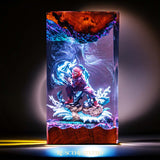
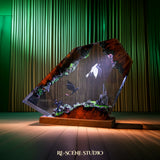
For fans who want a physical reminder of this arc, handcrafted resin art captures the iconic moments in three-dimensional form. The Naruto vs Pain lamp recreates the battle's most recognizable scene with embedded LED lighting that brings the clash to life on a desk or shelf.


Frequently Asked Questions
Featured Resin Lamps
Handcrafted with care — each one unique


Every lamp we create carries a piece of our heart — a small universe of light, resin, and imagination, handcrafted in our workshop for someone across the world who shares our love for these stories.