





![[FATHER'S DAY] Ember Glow Ticket | $6.68 — Handcrafted Epoxy Resin LED Lamp | Unique Ambient Decor & Collector's Gift](http://rescenestudio.com/cdn/shop/files/Lucky_Star_Ticket_NYE_2026_c61361fc-ea06-4a31-8379-e16ed7d47902.jpg?v=1767177179&width=320)


How LED Color Temperature Changes Your Mood at Home
Most people pick light bulbs by wattage and call it done. That is the wrong number to look at. The number that actually controls whether a room feels relaxing or stressful is color temperature, measured in Kelvin. A 2700K bulb makes a bedroom feel cozy. A 5000K bulb in the same room makes it feel like a doctor's waiting area. Same wattage, same brightness, completely different room. This is the practical guide to color temperature in plain English, with specific recommendations for every room in the house. By the end you will never buy a bulb without checking the K number.

What Is the Kelvin Scale, Actually?
Color temperature is measured in Kelvin (K) and it describes the color of the light a bulb produces. Lower numbers (2200K to 3000K) are warm, meaning the light has more orange and red in it, similar to a sunset or an old incandescent bulb. Higher numbers (4000K to 6500K) are cool, meaning the light has more blue in it, similar to a midday sky or a fluorescent office tube. The scale is named after Lord Kelvin, the 19th century physicist who developed the absolute temperature unit it borrows from. The connection is technical: if you heated a theoretical black object to that exact temperature, it would glow that color. You do not need to remember that for the practical part.
The four numbers that matter for home use:
| Color Temp | Common Name | What It Looks Like | Best For |
|---|---|---|---|
| 2200K-2700K | Warm White / Incandescent | Honey-amber glow, similar to candlelight or sunset | Bedrooms, living rooms, dining |
| 3000K | Soft White | Slightly less orange, still warm | Living rooms, hallways |
| 3500K-4000K | Cool White / Neutral | Balanced white, no color cast | Kitchens, bathrooms |
| 5000K-6500K | Daylight | Bluish-white, like midday sun | Home offices, garages, task work |
Why Warm Light Feels Cozy and Cool Light Does Not
The answer is biology. Human circadian rhythms evolved over millions of years to use color temperature as a clock. Warm orange light at sunset triggers melatonin production and signals to the body that it is time to wind down. Cool blue light at midday suppresses melatonin and signals that it is time to be alert. Your living room at 7pm with 5000K daylight bulbs is fighting your biology directly. Your brain thinks it is noon. Sleep quality drops, irritability rises, and you do not know why.

Three practical takeaways from this. First, never use bulbs above 3000K in any room you use after dark for relaxation. Bedrooms and living rooms should run on 2700K or 3000K maximum. Second, do not feel guilty about using cool 5000K daylight bulbs in your home office or garage during the day. Cool light boosts focus and alertness during work hours. Third, the worst thing you can do is mix color temperatures in one room. A 2700K floor lamp next to a 5000K ceiling light reads visually as broken. Pick one temperature per room and commit.
The Practical Room-by-Room Guide
Here is the simple version, room by room, that fixes 90% of home lighting problems.
Bedrooms: 2700K, always. The whole point of a bedroom is sleep, and warm light supports sleep biology. Replace any bulb above 3000K immediately. Use dimmable bulbs if you can. The light should feel like sunset, not like a dentist's office. A decorative resin lamp on a bedside table at 2700K does double duty as ambient lighting and atmosphere.
Living Room: 2700K or 3000K. Same logic as the bedroom, since this is where you relax in the evening. The 3000K is slightly less yellow if you find pure 2700K too orange. Both work. Floor lamps are your friend here, layered at multiple heights to avoid one harsh overhead.
Dining Room: 2700K. Food looks better under warm light. Cool light makes meat look gray and vegetables look wilted. Restaurants figured this out a hundred years ago. Your dining table should match.
Kitchen: 3500K to 4000K. This is the one room where cool light helps because you need to see what you are doing. Slicing onions and reading labels both benefit from neutral white light. Under-cabinet LED strips at 4000K are the standard upgrade.
Bathroom: 4000K. Cool enough to see colors accurately for makeup or grooming, warm enough not to feel clinical. Vanity lights at 4000K are the sweet spot. Anything above 5000K in a bathroom makes everyone look exhausted.
Home Office: 4000K to 5000K. Cool light boosts focus and reduces eye strain during long work sessions. If your home office doubles as a bedroom or guest room, install a switch with two color temperature options and flip between them.

Garage and Workshop: 5000K to 6500K. The closer to daylight, the better. You need to see what you are working on accurately. Cool LED shop lights are the standard for any hands-on work.
What Color Temperature Do Resin Lamps Use?
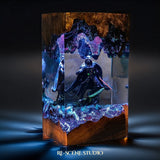
Most resin lamps run on warm white LED in the 2700K to 3000K range, because the whole point of a decorative resin lamp is mood. Cool white would make a beautiful resin piece look industrial and harsh. Our standard collection uses warm LED that pairs with the orange-amber tones of the resin itself, which is why a Godzilla or Batman resin lamp can sit on a bedside table or in a living room without breaking the room's lighting temperature.

The Deep Blue Ocean Resin Lamp is a useful example because the resin itself is cool-toned (deep blues, marine layers) but the LED inside is warm 2700K. The contrast creates depth: the resin reads as ocean, the warm light from inside reads as sunset hitting the water from above. Starting at $59 in Size M, this is one of the most popular bedroom and bathroom pieces in our catalog because it does not fight the warm-white lighting in those rooms. The Size L at $89 anchors a living room shelf. The Size XL at $149 becomes a centerpiece.

The Eternal Rose Garden Resin Lamp is the other direction: warm-tone resin (preserved roses in amber and red) plus warm-white LED. The two warm tones reinforce each other and create one of the most ambient-light-positive pieces in our catalog. This is the right piece for a bedroom nightstand or a romantic reading corner. Pricing starts at $124.95 for the standard engraving option. For broader Father's Day gift ideas at varied price points, our Father's Day gift guide covers the full lineup.
Common LED Mistakes to Avoid
These are the mistakes that cost you the most. First, mixing color temperatures in the same room. A 2700K table lamp next to a 5000K overhead bulb reads as broken and uncomfortable, even if most people cannot say why. Pick one temperature per room and replace every bulb to match. Second, using cool 5000K LED in any space where you eat or relax. The light suppresses melatonin and changes how food looks. Third, buying the cheapest bulb without checking the K number. The K rating is printed on every package. Look for it before you buy.
Fourth, using high-CRI bulbs is a luxury, not a requirement, but it matters for art and decor. CRI (color rendering index) measures how accurately a bulb shows colors. Anything below 80 CRI is the wrong choice for a room with art or a serious resin lamp display, because colors will look muted. Look for 90+ CRI on any bulb that lights a room where you care how things look. The price difference is usually $1 to $2 per bulb. Worth it.
Frequently Asked Questions
Get the Lighting Right in Every Room
The biggest single upgrade you can make to your home costs less than $100 and takes one weekend. Buy a set of 2700K or 3000K warm white bulbs and replace every bulb in your bedroom and living room. Then buy 4000K bulbs and replace your kitchen and bathroom. Then buy 5000K for your home office or workshop. Within an hour you will feel the difference. Within a week you will sleep better. Color temperature is the most underrated detail in home design.
If you are pairing a new lighting setup with a Father's Day gift, our Father's Day lineup features warm-LED resin lamps that complement any 2700K-3000K bedroom or living room. For specific franchise picks, see our Batman decor guide for DC fans or our Godzilla guide for cinema-loving dads.
Featured Resin Lamps
Handcrafted with care — each one unique



Every lamp we create carries a piece of our heart — a small universe of light, resin, and imagination, handcrafted in our workshop for someone across the world who shares our love for these stories.