




What Preserved Flowers Actually Are and How Long They Last

You've probably seen them in boutique stores and gift shops: flowers that look fresh but sit in display cases without water, soil, or sunlight. They're not silk. They're not plastic. They're real flowers that have been chemically preserved to maintain their shape, texture, and color for years instead of days. The preserved flower market has grown to over $1.2 billion globally (Grand View Research, 2024), driven by consumers who want the beauty of fresh flowers without the guilt of watching them die in a week.
But how does preservation actually work? How long do they really last? And are they worth the premium over fresh flowers? Here's everything you need to know, with specific timelines and care instructions that most sellers don't include.
How Flower Preservation Works
The most common preservation method is glycerin replacement. Fresh flowers are harvested at peak bloom, dehydrated, and then submerged in a solution of glycerin and plant-based dyes. The glycerin replaces the water in the flower's cells, maintaining the soft, flexible texture of fresh petals while preventing decomposition. The process takes 10 to 14 days depending on the flower type and size.
The result is a flower that feels like a fresh petal to the touch (slightly softer, actually) but doesn't need water, sunlight, or any care beyond keeping it out of direct sunlight and high humidity. The color can be the flower's natural shade (if undyed) or enhanced/changed with plant-safe dyes during the glycerin bath.
Other Preservation Methods
Glycerin isn't the only approach. Freeze-drying removes moisture through sublimation (turning ice directly to vapor under vacuum pressure). Freeze-dried flowers retain the most accurate color and shape but are more brittle than glycerin-preserved flowers. They're commonly used for wedding bouquet preservation where exact color matching matters.
Silica gel drying is a DIY-friendly method where flowers are buried in silica crystals for 2 to 7 days. It works well for smaller blooms but can distort the shape of larger petals. Air drying (hanging flowers upside down) is the oldest method but produces the least natural-looking results; colors fade significantly and petals become papery.

| Method | Lifespan | Texture | Color Accuracy | Cost |
|---|---|---|---|---|
| Glycerin preservation | 1 to 3 years | Soft, flexible | Good (can be enhanced) | $30 to $80 |
| Freeze-drying | 5 to 10 years | Brittle, delicate | Excellent (true-to-life) | $100 to $300 |
| Silica gel drying | 1 to 2 years | Slightly stiff | Good (some fading) | $10 to $30 (DIY) |
| Air drying | 6 months to 1 year | Papery, fragile | Poor (significant fading) | Free (DIY) |
| Resin encapsulation | 10+ years (permanent) | Solid (embedded in resin) | Excellent (sealed from air) | $49 to $150 |
How Long Do Preserved Flowers Actually Last?
The honest answer depends on the method and environment. Glycerin-preserved roses in a climate-controlled room (40% to 60% humidity, no direct sunlight) will look vibrant for 1 to 3 years. In a humid bathroom or a sunny windowsill, that drops to 6 to 12 months. Colors fade gradually from the outside edges inward, so you'll notice subtle changes before the flower looks noticeably different.
Resin-encapsulated flowers are the longest-lasting option because the flower is sealed completely inside a solid, optically clear material. No air, no moisture, no UV exposure reaches the petals. Flowers preserved in quality resin maintain their appearance essentially indefinitely. The resin itself can yellow slightly over many years if exposed to constant UV light, but the flower inside remains unchanged.
The key variable is UV exposure. Ultraviolet light breaks down organic pigments regardless of the preservation method. Keep preserved flowers away from windows that receive direct afternoon sun, and they'll last dramatically longer. A shelf that gets indirect light is ideal.
Preserved Flowers vs Fresh Flowers: The Real Cost Comparison
A dozen fresh roses costs $30 to $60 and lasts about 10 days with proper care. Over one year, maintaining a fresh arrangement (replaced monthly) costs $360 to $720. A quality preserved rose arrangement costs $50 to $100 once and lasts 1 to 3 years. The math heavily favors preserved flowers for anyone who wants continuous floral decor without recurring costs.
There's also the sustainability angle. The fresh-cut flower industry generates significant waste: 40% of fresh flowers are discarded before they ever reach a consumer, according to the International Trade Centre. Preserved flowers eliminate this waste stream entirely. One preserved arrangement replaces 12 to 36 fresh arrangements over its lifetime.
The trade-off is fragrance. Preserved flowers lose their scent during the preservation process. If smell is important to you, fresh flowers win. Some preserved flower companies add essential oils to approximate a floral scent, but it's not the same as a fresh rose.
There's also the tactile difference to consider. While glycerin-preserved flowers feel remarkably similar to fresh petals, they don't have the same weight or moisture. Most people can't tell the difference from a normal viewing distance, but handling them reveals the preservation. For display purposes where visitors look but don't touch, preserved flowers are virtually indistinguishable from fresh ones, especially in good lighting.

Flowers in Resin: The Permanent Option
Resin encapsulation represents the most permanent form of flower preservation. Real flowers are carefully positioned inside a mold, then surrounded by layers of optically clear epoxy resin that cure over multiple days. The result is a solid, transparent block with a flower frozen at its peak bloom inside, glowing softly when backlit by embedded LED lighting.
This approach combines preservation with art. Each piece is handcrafted, and because resin flows slightly differently with every pour, no two pieces are identical. The embedded LED lighting creates a warm, diffused glow that highlights the flower's natural colors and textures in ways that a simple vase arrangement can't match. Our artisan workshop crafts several floral resin pieces that showcase different flower types, from roses and sunflowers to carnations and baby's breath. For more on how these are made, see our article on why no two resin lamps are identical.


Best Use Cases for Preserved Flowers
Preserved flowers work best in specific contexts where their strengths (longevity, zero maintenance, consistent appearance) outweigh their limitations (no fragrance, higher upfront cost). The ideal placements include: bedroom nightstands (where they provide permanent beauty without needing Sunday morning water changes), office desks (where real plants often die from neglect), gift occasions where the recipient lives far away (no shipping damage concerns like fresh arrangements), and memorial or sentimental displays where permanence is the entire point.
Wedding bouquet preservation has become particularly popular. A freeze-dried or resin-encapsulated bridal bouquet costs $150 to $400 but lasts decades as a keepsake. Compared to the $200 to $500 spent on the original fresh bouquet that would otherwise end up composted within two weeks, many couples consider it worthwhile. Some preservation studios can also capture individual blooms from a bouquet rather than the entire arrangement, reducing cost while still preserving the memory.
Care Tips for Preserved Flowers
The biggest advantage of preserved flowers is minimal maintenance, but "minimal" isn't "zero." Following these guidelines maximizes their lifespan:
- Keep out of direct sunlight. UV light is the #1 enemy of preserved flower color. A shelf with indirect light is perfect.
- Avoid high humidity. Bathrooms and kitchens are poor locations. Glycerin-preserved flowers absorb moisture from the air, which can cause petal softening or mold in extreme cases.
- Don't water them. This sounds obvious, but it's the most common mistake. Adding water to preserved flowers causes immediate deterioration.
- Dust gently. Use a soft brush or low-pressure air duster. Never use wet cloths or cleaning sprays on preserved petals.
- Resin-encapsulated flowers need less care. Because the flower is sealed inside solid resin, dust the outside surface normally. The flower itself is permanently protected.
Frequently Asked Questions
Featured Resin Lamps
Handcrafted with care, each one unique
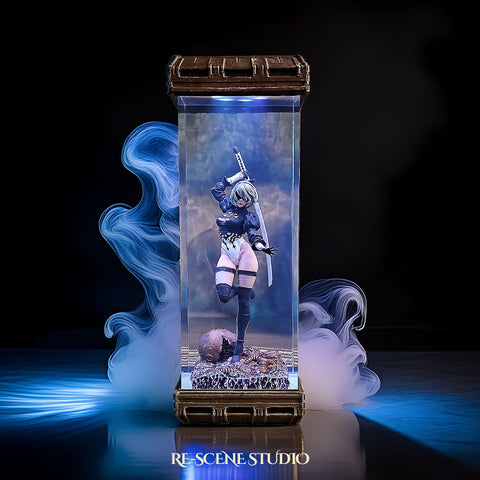
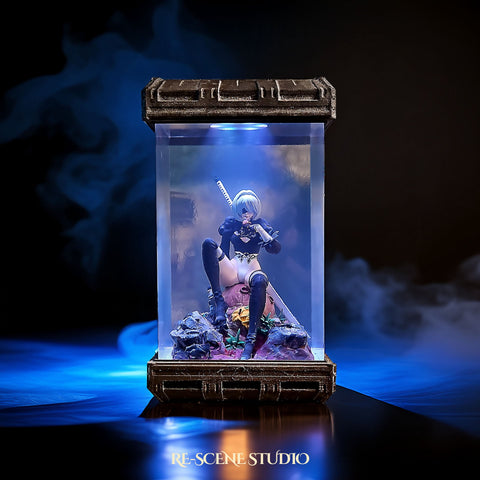
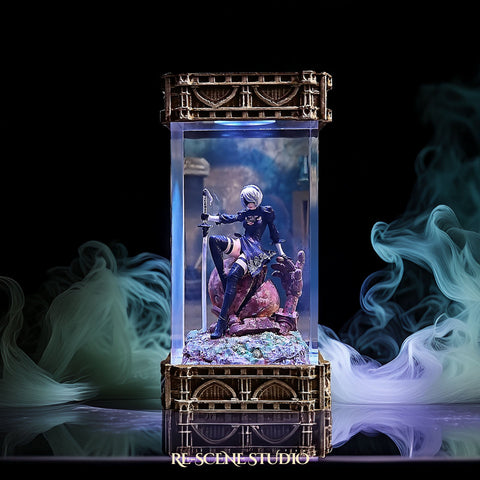
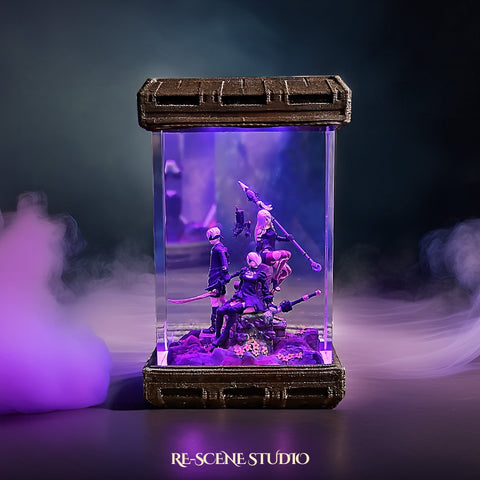
Every lamp we create carries a piece of our heart: a small universe of light, resin, and imagination, handcrafted in our workshop for someone across the world who shares our love for these stories.