






![[FATHER'S DAY] Ember Glow Ticket | $6.68 — Handcrafted Epoxy Resin LED Lamp | Unique Ambient Decor & Collector's Gift](http://rescenestudio.com/cdn/shop/files/Lucky_Star_Ticket_NYE_2026_c61361fc-ea06-4a31-8379-e16ed7d47902.jpg?v=1767177179&width=320)


Resin Color Variation: Why Your Lamp Won't Match the Photo

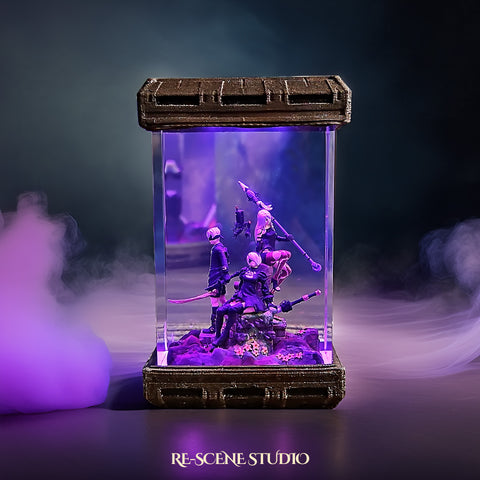
You ordered a handcrafted resin lamp. The product photo on the website looked perfect: vibrant color, clean detail, exactly the piece you wanted on your desk. The lamp arrived a week later, and it looked subtly different. Maybe slightly warmer in tone, maybe a small bubble in a place the photo didn't show, maybe a color that reads differently in your room than it did in the photo.
This is normal. It's not deception. It's not a quality control failure. Three independent factors cause the difference between the product photo and the lamp on your desk, and understanding them ahead of time changes the unboxing experience from disappointment to appreciation. This guide walks through what causes resin color variation, what's part of the handcrafted experience, and what would actually be a defect worth contacting support about.
The Three Sources of Variation
The gap between product photo and physical lamp comes from three independent factors. Most variation is a combination of all three, not just one:
| Factor | What It Affects | Typical Variation |
|---|---|---|
| Handcraft variation | Resin density, tint, bubble pattern, internal detail | Subtle; each piece slightly unique |
| Photo lighting | How color reads in studio vs your room | Significant; can shift hue 10-15% |
| Screen calibration | How your phone or laptop renders the photo | Variable; iPhone vs Android vs PC differ |
Add them together and the lamp on your desk can look noticeably different from what you remembered seeing online, even when nothing went wrong at any step.
Source 1: Resin Handcraft Variation Is the Point
Resin lamps are poured by hand into silicone molds, then cured for hours, polished, fitted with an LED module, and inspected. At every step, micro-decisions and material variations introduce subtle differences:
- Resin batches. Each batch of resin has slightly different baseline tint depending on the manufacturer's run. Two batches a month apart can produce subtly warmer or cooler base tones.
- Pour speed and temperature. The artisan controls how fast the resin enters the mold and at what temperature. Both affect bubble distribution and clarity.
- Cure time. Resin continues setting for hours after pour. Pieces cured at slightly different ambient temperatures end up with slightly different finished densities.
- Polish technique. The final surface polish is done by hand. Each artisan has slight variations in pressure, sanding pattern, and finish strokes.

This is fundamentally the difference between handcrafted and mass-produced. A factory-made plastic figure is identical to every other unit because it's injection-molded from the same machine settings. A handcrafted resin piece is intentionally one of a kind. The variation isn't a bug; it's a feature that defines the entire category. Our deeper guide on why no two resin lamps are identical covers the science of handcraft variation in detail.

Source 2: Studio Lighting vs Your Room
Product photos are shot under controlled studio lighting. Most professional product shoots use 5000K-5500K daylight-balanced strobes, which renders colors close to what they look like at noon outdoors. Your home, by contrast, is lit by some combination of:
- Warm 2700K LED bulbs (most living rooms in the evening)
- Mixed 3000-4000K kitchen and office lighting
- Filtered daylight through curtains (color shifts based on curtain color)
- Whatever color your walls are reflecting
The same lamp under 5500K daylight strobes vs 2700K warm white LED looks meaningfully different. The studio shot tends to look more vibrant and accurate; the home view tends to look slightly warmer and softer. Neither is "wrong"; they're just rendered under different light conditions.
Test for yourself: take a piece of fabric or a colored book outdoors at noon, then bring it inside and view it under your evening living room lighting. The same object will read as a different color in each location. This is normal physics, not bias in the product photo.
Source 3: Screen Calibration Reality
Then there's the screen problem. Apple's iPhones, Samsung phones, Google Pixels, MacBooks, Windows laptops, and HDR TVs all display the same image with different color profiles. A lamp photographed accurately can look:
- Slightly oversaturated on iPhones (Apple's "Vivid" rendering)
- Slightly cooler on Samsung OLED screens (factory-calibrated for high contrast)
- Slightly washed out on cheap budget phones with poorly calibrated screens
- Different again on a desktop monitor with default factory settings
Color professionals (graphic designers, photographers) calibrate their monitors against industry standards using devices like the Calibrite ColorChecker Display. Most consumers never calibrate. The result: the photo on the maker's screen and the photo on your screen are not identical, even though the file is the same.

What's Normal Variation vs What's a Defect
Most variation falls into the "normal handcrafted experience" category. Understanding the line between expected variation and an actual defect helps you decide whether to contact support:
| Observed | Normal Variation? | Action |
|---|---|---|
| Slight color shift (5-10% from photo) | YES | Expected, no action needed |
| One or two micro-bubbles in resin | YES | Expected handcrafted byproduct |
| Faint surface scratch from polish | YES | Cosmetic, does not affect function |
| Uneven glow on different sides | YES | LED placement is intentional and directional |
| Color completely different (e.g., red vs purple) | NO, contact support | Indicates wrong product or shipping error |
| Large crack penetrating into the resin block | NO, contact support | Structural defect, likely shipping damage |
| LED doesn't light up at all | NO, contact support | Functional defect |
| Bubble directly obscuring the main figure | NO, contact support | Cosmetic defect that affects the visible design |
For more on handling actual defects, our troubleshooting guide covers what to do when something is genuinely wrong.
How to Display Your Lamp So Variation Becomes a Feature
The variation that initially feels like a downside becomes an upside once the lamp is placed correctly. Three placement strategies:
- Display in the lighting it will live in. Don't compare your lamp to the studio shot. View it in your living room, with your evening lighting, where it'll actually be used.
- Pair with similar handcrafted pieces. Two or three handcrafted items together (a ceramic mug, a handmade journal, the lamp) read as a curated collection. The variation between them is part of the aesthetic.
- Photograph it in your space. Take your own photo with your phone in your room. That photo becomes your "real" reference, not the studio shot.

How to Photograph Your Lamp So It Looks Like You Remember
If you're sharing photos of your lamp on social media, replicating the studio look at home requires a few specific tweaks. The full breakdown is in our resin lamp Instagram photography guide, but the short version:
- Use a single 5000K white LED bulb in the room as your photo light. Turn off all other lights.
- Shoot near a window during the daytime if possible (natural light renders color most accurately).
- Reduce your phone's "vivid" or "rich color" setting before shooting.
- Don't use flash; it overexposes the resin and washes out the internal glow.
With those four changes, your phone photo of the lamp will look much closer to the studio shot than the casual evening photo would.
How to Set Expectations Before Ordering
If you want the closest match between product photo and delivered piece, three pre-purchase steps help:
- View product photos in your home's evening lighting. Open the product page on your phone in the room where the lamp will live. The phone+lighting combo is the closest preview you'll get.
- Look at the maker's customer photos. Most makers feature customer Instagram tags or a customer photo gallery. These shots are taken in real homes under real lighting and represent the lamp more accurately.
- Check the maker's "about handcraft variation" page. Reading the variation policy before ordering sets your expectations correctly. A maker who is transparent about variation is more likely to deliver consistent quality.
The Honest Trade-Off
Here's the deal that buying handcrafted involves: you get a unique piece in exchange for accepting that "unique" means subtly different from the product photo. The trade-off is what makes the category exist. If you want pixel-perfect identical-to-the-photo product, mass-produced figures from injection molding deliver that. If you want one of a kind, handcrafted, with the human signature visible in the variation, resin lamps deliver that. The two markets don't compete; they serve different buyers.
For more on the full handcrafted experience, our guides on handmade vs mass-produced and why handcrafted resin lamps cost more cover the trade-off in pricing and quality terms.
Frequently Asked Questions
Featured Resin Lamps
Handcrafted with care — each one unique


Every lamp we create carries a piece of our heart — a small universe of light, resin, and imagination, handcrafted in our workshop for someone across the world who shares our love for these stories.