



Kaiju No. 8: Why This Anime Deserves Your Attention

Most shonen protagonists are teenagers with big dreams and zero life experience. Kafka Hibino is 32, has a bad back, works a dead-end job cleaning up kaiju carcasses, and has already failed to achieve his childhood dream of joining the Defense Force. Then a small kaiju-like creature flies into his mouth, merges with his body, and gives him the power to transform into one of the monsters he's spent his career mopping up after. That's the setup for the Kaiju No. 8 anime, and it's one of the most genuinely entertaining action anime to come out of the 2020s.
The Kaiju No. 8 anime premiered in April 2024, adapted from Naoya Matsumoto's manga that debuted on Shonen Jump+ in 2020. Season 1 covered chapters 1 through 40, animated by Production I.G (the studio behind Attack on Titan's final season and Haikyuu). Season 2 aired from July to September 2025, covering chapters 41 through 80. With the manga still running and Season 3 widely expected, now is an ideal time to catch up.
What Makes the Kaiju No. 8 Anime Stand Out
Three things set this series apart from the shonen pack:
1. An adult protagonist with real stakes. Kafka isn't a prodigy. He's an underdog in the truest sense: older than his peers, physically past his prime, and hiding a secret (his kaiju form) that would get him executed if the Defense Force discovered it. The tension isn't "will the hero win?" It's "will the hero survive being found out?" That psychological pressure is more compelling than another power-up arc.
2. The monster designs are genuinely creative. Kaiju in this series aren't generic dinosaur clones. They're bio-organic nightmares with unique abilities, weak points, and threat levels (measured in "fortitude" numbers). The numbered kaiju (No. 1 through No. 10) are apex predators with intelligence and strategy. Each battle feels like a puzzle, not just a brawl.

3. The comedy actually lands. Kafka's personality drives genuine humor. He's self-deprecating, sarcastic, and aware of how absurd his situation is. The comedy doesn't undercut the drama; it makes the characters feel human. You're invested in Kafka not because he's cool, but because he feels like a real person who deserves a second chance at his dream.
The Plot: Seasons 1 and 2 Breakdown (Spoiler-Light)
Season 1 follows Kafka as he secretly transforms into a kaiju (designated "Kaiju No. 8" by the Defense Force) while simultaneously trying to pass the entrance exam and join the Third Division. The central conflict: Kafka's kaiju form is immensely powerful, but using it risks exposing his identity. He has to prove himself as a regular soldier while hiding the very thing that makes him special.
The key characters introduced in Season 1 include Mina Ashiro (Third Division Captain and Kafka's childhood friend), Reno Ichikawa (Kafka's young protege and confidant), Kikoru Shinomiya (elite recruit with family pressure), and Soshiro Hoshina (Vice-Captain with devastating blade techniques).

Season 2 escalates dramatically. Kafka's identity is exposed. Rather than executing him, the Defense Force makes a calculated decision to study and potentially weaponize him. Meanwhile, Kaiju No. 9, the series' main antagonist, infiltrates the Defense Force by possessing a human host and orchestrates a coordinated attack using multiple numbered kaiju. The season ends on a cliffhanger that sets up what promises to be an intense third season.
The Power System: Fortitude Numbers and Combat Suits
Kaiju No. 8 has one of the cleaner power systems in modern shonen. Every kaiju and soldier gets a "fortitude" number that measures combat power. A regular kaiju might measure at fortitude 3 to 5. A numbered kaiju (the elite threats) ranges from fortitude 6 to 9+. The Defense Force's combat suits amplify human strength to compete in that range.
Kafka in his kaiju form measures at fortitude 9.8, making him nearly the strongest kaiju alive. The twist: he can only maintain the form for a limited time, and each transformation risks the kaiju consciousness inside him taking over permanently. It's a ticking clock that adds urgency to every battle.
| Entity | Fortitude | Threat Level |
|---|---|---|
| Regular kaiju | 3-5 | Manageable by standard squads |
| Daikaiju (large) | 5-7 | Requires division-level response |
| Numbered kaiju (#1-#10) | 6-9+ | Can wipe out entire divisions |
| Kafka (Kaiju No. 8) | 9.8 | Potentially the strongest living kaiju |
| Defense Force soldiers (suited) | 2-7 | Varies by suit type and user skill |
What makes this system satisfying: the numbers are consistent. When a fortitude 6 kaiju appears, you know it requires a specific level of response. There are no asspull power-ups that break the scale. Kafka's strength is established early and remains a ceiling, not a moving target. The drama comes from strategy and sacrifice, not escalating power creep.
Why Kafka Hibino Works as a Protagonist

The typical shonen protagonist is 15, discovers a hidden power, and spends the series mastering it while the world celebrates them. Kafka is the opposite. He's 32, discovered his power by accident, has to hide it from everyone, and the world would kill him if they knew. That inversion of the formula is what gives Kaiju No. 8 its emotional weight.
Kafka already failed once. He spent his twenties cleaning kaiju corpses while watching Mina Ashiro, his childhood friend, become the youngest Division Captain in Defense Force history. He's not driven by destiny or prophecy. He's driven by regret and a promise he made when he was 8 years old. That motivation feels more real than any "chosen one" narrative because most adults understand what it's like to look back and wonder what would have happened if they'd tried harder.
The kaiju transformation adds a layer of horror to Kafka's journey. Every time he uses his power, he risks losing himself to the kaiju consciousness inside him. It's not a power fantasy; it's a ticking time bomb. He gains strength but loses agency. By Season 2, when the Defense Force discovers his secret and has to decide whether to execute or study him, the series asks a genuinely uncomfortable question: can you trust someone whose body is literally a weapon that might go off?
This dual identity, the monster hiding inside the soldier, is what elevates the series beyond simple action. It's a metaphor for anyone who feels like they don't belong, who's hiding a part of themselves because revealing it would change how everyone sees them. That resonates across cultures and age groups, which is why the manga sold over 15 million copies worldwide.
The Animation Quality: Production I.G at Their Best
What makes the Kaiju No. 8 anime visually stunning is its studio. Production I.G has a reputation for sakuga-heavy action sequences, and Kaiju No. 8 delivers. The kaiju battles in both seasons feature fluid animation with detailed destruction effects, dynamic camera movements, and impact frames that make you feel the weight of every punch. The studio's experience with large-scale military anime (Attack on Titan) shows in how they handle squad-based combat choreography.
Season 2 in particular steps up the visual spectacle. The Kaiju No. 9 infiltration arc features some of the most intense hand-to-hand combat sequences in recent anime, particularly Hoshina's extended fight that pushed the animation team to their limits. If you're watching for the action, you won't be disappointed.
The character designs are clean and expressive, making the comedy land visually without needing exaggerated chibi reactions. Kafka's transformation sequence, from the bone mask crackling across his face to the full kaiju form erupting, is genuinely impressive every time it happens. It's the kind of visual setpiece that makes you pause and rewind.
Should You Watch It? Who It's For and Who Should Skip It
You'll love the Kaiju No. 8 anime if you enjoy Attack on Titan's military tension, One Punch Man's humor, and Pacific Rim's monster spectacle. It's a fast-paced action series with a likable protagonist, creative monster designs, and a plot that doesn't waste time on filler arcs. Season 1 (12 episodes) and Season 2 (11 episodes) are both tight, well-paced, and available on Crunchyroll.
You might want to skip the Kaiju No. 8 anime if you're looking for deep philosophical themes or slow-burn character drama. Kaiju No. 8 is primarily an action series. It has emotional beats, but it's not trying to be Frieren or Vinland Saga. It knows what it is: fun, exciting, well-animated monster battles with a protagonist you root for. Sometimes that's exactly what you want.
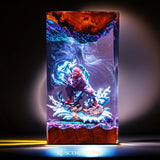
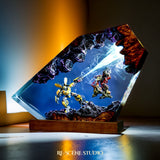
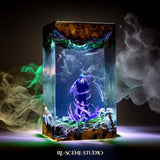
If you're already a Kaiju No. 8 anime fan, you know the imagery from this series is perfect for collection-worthy art. The kaiju transformation scenes, in particular, have a visual intensity that translates beautifully into physical display pieces.

For more anime recommendations across different genres, check out our guide to Spring 2026 anime must-watch shows. And if you're looking to build out your anime display, our article on how to display anime collections as an adult covers the styling principles that make a collection look intentional rather than cluttered.
Frequently Asked Questions
Featured Resin Lamps
Handcrafted with care, each one unique
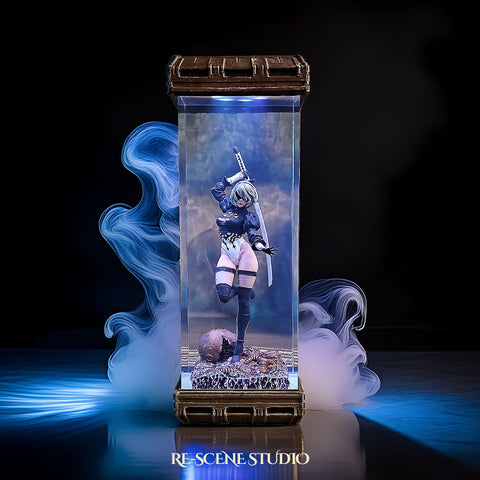
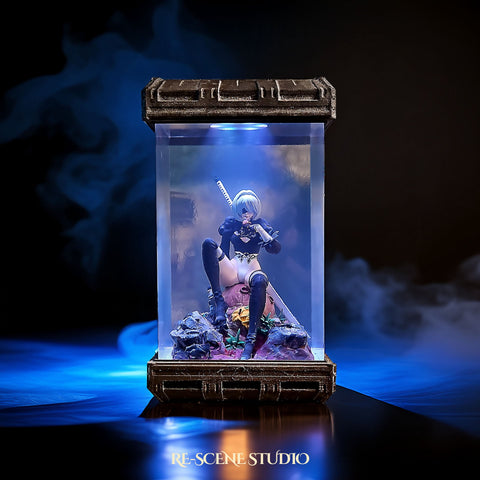
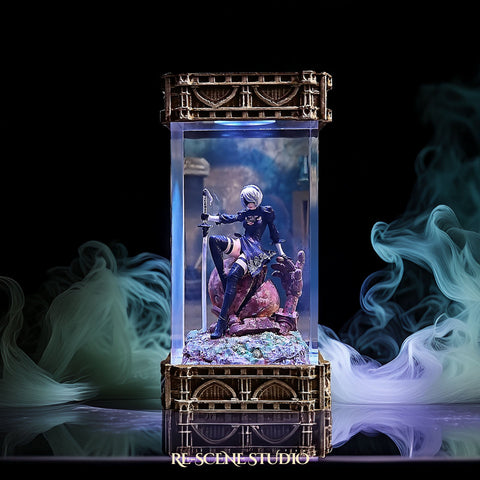
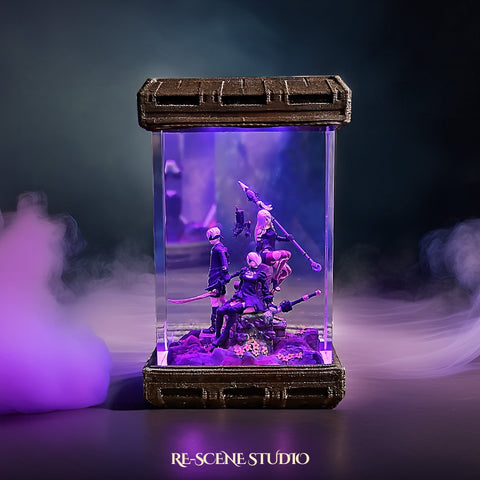
Every lamp we create carries a piece of our heart: a small universe of light, resin, and imagination, handcrafted in our workshop for someone across the world who shares our love for these stories.