




![[FATHER'S DAY] Ember Glow Ticket | $6.68 — Handcrafted Epoxy Resin LED Lamp | Unique Ambient Decor & Collector's Gift](http://rescenestudio.com/cdn/shop/files/Lucky_Star_Ticket_NYE_2026_c61361fc-ea06-4a31-8379-e16ed7d47902.jpg?v=1767177179&width=320)


How to Layer Lighting Like a Designer

Your room has one ceiling light. You flip the switch, and the entire space gets the same flat, shadowless wash. Everything looks the same at noon and midnight. That single fixture is doing the job of three, and it shows.
Interior designers never rely on one light source. They layer lighting using a formula with three distinct types working together to create depth, warmth, and function in every corner of a room. The good news is that you don't need a design degree or a renovation budget to do this yourself.
When you layer lighting properly, you use three types: ambient (general brightness), task (focused work light), and accent (decorative highlights). When all three are present, a room stops feeling like a waiting room and starts feeling like home. Here's exactly how to set it up, room by room.
How to Layer Lighting: The 3 Types Every Room Needs
Think of lighting in layers, like getting dressed.. Ambient light is the base layer.. Task light is functional, like a jacket.. Accent light is the accessory that ties it all together.
Each serves a different purpose, and skipping any one of them creates an imbalance you can feel even if you can't name it.
Layer 1: Ambient Lighting (The Foundation)
Ambient lighting provides overall illumination for a room. It's what lets you walk around without bumping into furniture. Common sources include ceiling-mounted fixtures, recessed downlights, chandeliers, and large pendant lights.
The mistake most people make is stopping here. A single ceiling light gives you visibility, but it flattens everything. Shadows disappear, depth vanishes, and the room feels like an office. Ambient light should be soft and even, not the only light in the room.
Best sources: flush mounts, semi-flush mounts, recessed cans, cove lighting, large pendants. Aim for 2700K to 3000K color temperature for living spaces.
Layer 2: Task Lighting (The Functional Layer)
Task lighting provides focused, brighter light exactly where you need it. Reading, cooking, applying makeup, working at a desk: each activity needs its own light source positioned to reduce shadows and eye strain.
The key is placement. A desk lamp should sit to the side of your dominant hand so your arm doesn't cast a shadow on your work. Under-cabinet lights in a kitchen should angle forward, not straight down, to illuminate the countertop without glare. A reading lamp beside a chair should hit the page, not your eyes.
Best sources: desk lamps, under-cabinet strips, pendant lights over islands, adjustable floor lamps, vanity sconces mounted at eye level.
Layer 3: Accent Lighting (The Personality)
Accent lighting highlights specific objects, textures, or architectural features. It creates visual interest and draws the eye to what matters. Without it, a room is functional but forgettable. With it, the same room tells a story.
Accent lights should be roughly three times brighter than the ambient light in the area they're highlighting. This contrast is what creates the "pop" effect. Picture lights over artwork, LED strips behind a TV, uplights on a bookshelf, or a decorative lamp on a side table all serve this purpose.
Best sources: picture lights, LED strip lighting, track lights, decorative table lamps, handcrafted accent lamps, wall sconces aimed at artwork.

The Color Temperature Rule
Color temperature, measured in Kelvin (K), determines whether a light feels warm and cozy or cool and clinical. Getting this wrong is the most common lighting mistake after single-source dependency.
| Color Temperature | Kelvin Range | Best For | Feels Like |
|---|---|---|---|
| Warm White | 2700K | Bedrooms, living rooms | Candlelight, cozy |
| Soft White | 3000K | Kitchens, bathrooms | Relaxed but clear |
| Neutral White | 3500K | Home offices, closets | Clean, balanced |
| Cool White | 4000K+ | Garages, task areas | Clinical, energizing |
The critical rule: keep color temperature consistent within each room. Mixing a 2700K floor lamp with a 5000K ceiling light creates a visual clash that makes the space feel disjointed. If your living room uses 2700K ambient, your accent lights in that same room should also be 2700K to 3000K.
For a deeper look at how warm and cool LEDs affect mood and sleep quality, check out our guide to 5 lighting mistakes that make any room look cheap.
Room-by-Room Layering Guide
Living Room: 4 to 5 Sources Minimum
The living room is where you layer lighting the most because it serves the most functions: relaxing, entertaining, reading, watching TV.. Start with a central ambient fixture or recessed cans.. Add a floor lamp next to the primary seating area for reading (task).. Place a decorative table lamp on a console table (accent).
If you have artwork or a feature wall, add a picture light or directional track light.
Pro tip: put your ambient lights on a dimmer. The light you need for cleaning at 2 PM is not the light you want for movie night at 9 PM. Dimmers cost under $25 and take 15 minutes to install.

Bedroom: Calm, Warm, and Adjustable
Bedrooms should feel restful.. Avoid overhead lights with exposed bulbs; they create harsh shadows and make the ceiling the brightest thing in the room.. Instead, use a semi-flush mount with a diffuser for ambient light.. Add bedside table lamps or wall-mounted sconces for reading (task).
A decorative accent lamp on a dresser or shelf adds warmth without brightness.
Keep everything at 2700K. Your bedroom is the one room where cooler color temperatures have no place. Research from the Sleep Foundation shows that exposure to blue-rich light (4000K+) within 2 hours of bedtime suppresses melatonin by up to 50%.
Home Office: Clarity Without Eye Strain
Your desk needs its own task light, period. Relying on the room's ambient light creates uneven illumination that strains your eyes over long work sessions. Position a desk lamp at a 45-degree angle to your monitor, on the opposite side of your dominant hand.
For video calls, add a soft ambient source behind your camera (a ring light or a diffused lamp) so your face is evenly lit without shadows. The ambient ceiling light can go to 3000K or 3500K here since energy and focus matter more than coziness.
Kitchen: Bright and Layered
Kitchens are where you need to layer lighting the most for safety.. You're handling knives, heat, and boiling water.. Under-cabinet LED strips are non-negotiable for countertop task lighting.. Pendant lights over an island provide both task and ambient light.
Recessed cans handle general ambient duty.
For accent, consider in-cabinet lighting with glass-front cabinets, or LED strips along the toe kick for a subtle glow that makes the kitchen feel larger at night.
How Much Light Do You Actually Need?
Once you layer lighting across multiple sources, you need to think about lumens per square foot (also called foot-candles). Here's a quick reference:
| Room | Lumens per Sq Ft | Example (150 sq ft room) |
|---|---|---|
| Living room | 10-20 | 1,500-3,000 lumens total |
| Bedroom | 10-15 | 1,500-2,250 lumens total |
| Kitchen | 30-40 | 4,500-6,000 lumens total |
| Home office | 40-50 | 6,000-7,500 lumens total |
| Bathroom | 40-50 | 4,000-5,000 lumens total |
These numbers represent total light from all sources combined, not just one fixture. This is why a single 800-lumen ceiling bulb in a 150-square-foot living room feels dim: you need at least 1,500 lumens spread across multiple sources.
Height Matters: The Three-Level Rule
When you layer lighting, place sources at three distinct heights to create depth:
- Ceiling level (ambient): pendants, flush mounts, recessed cans
- Eye level (task/accent): wall sconces, floor lamps, tall shelf lights
- Table level (accent/task): table lamps, desk lamps, candles
When all your light comes from one height (typically the ceiling), the room feels flat because there are no vertical shadows. Adding a table lamp and a floor lamp introduces light at two new heights, instantly creating dimension.
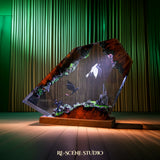
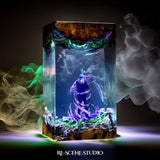
Accent lamps, like handcrafted resin pieces that glow from within, work particularly well at table level because they cast warm, diffused light upward and outward rather than downward like a ceiling fixture.

Handcrafted accent lamps like the Deep Green Forest Resin Lamp serve double duty: they provide warm, diffused table-level accent light while also functioning as a conversation-starting art piece. Unlike mass-produced LED strips, each handcrafted lamp creates a unique glow pattern based on the materials sealed inside.
Common Layering Mistakes (and How to Fix Them)
5 Mistakes That Kill Your Lighting
- One light source per room: Add at least 2 more sources at different heights.
- Mixing color temperatures: Keep all bulbs in one room within 300K of each other.
- No dimmer switches: Install dimmers on ambient sources ($15-25 each).
- Overhead-only lighting: Add eye-level and table-level sources for depth.
- Ignoring accent lighting: One decorative lamp or LED strip changes everything.
The single biggest improvement most rooms need is simply adding a second or third light source. You don't need to rewire anything. A table lamp, a floor lamp, or a plug-in wall sconce instantly introduces another layer. Start with one room, get it right, then move to the next.
If you want to learn how budget-friendly changes can completely transform a space, see our guide on how to make any room feel cozy on a budget.
Budget Breakdown: Layer Any Room for Under $150
You don't need expensive fixtures to layer lighting properly. Here's a realistic budget for adding two layers to a room that currently only has a ceiling light:
| Item | Purpose | Cost Range |
|---|---|---|
| Floor lamp with diffuser | Task/ambient | $30-60 |
| Table lamp or accent lamp | Accent | $25-90 |
| Dimmer switch (install yourself) | Control | $15-25 |
| LED strip (behind TV or shelf) | Accent | $12-20 |
| Total | $82-195 |
The most impactful single purchase for most rooms is a warm-toned table lamp in the $30-90 range. It adds accent light at a new height, creates warm shadows, and gives the room a focal point. Handcrafted accent lamps tend to cost more than mass-produced options ($49-149) but they double as art pieces that start conversations.

Frequently Asked Questions
Featured Resin Lamps
Handcrafted with care — each one unique



Every lamp we create carries a piece of our heart — a small universe of light, resin, and imagination, handcrafted in our workshop for someone across the world who shares our love for these stories.