





![[FATHER'S DAY] Ember Glow Ticket | $6.68 — Handcrafted Epoxy Resin LED Lamp | Unique Ambient Decor & Collector's Gift](http://rescenestudio.com/cdn/shop/files/Lucky_Star_Ticket_NYE_2026_c61361fc-ea06-4a31-8379-e16ed7d47902.jpg?v=1767177179&width=320)


Epoxy vs Resin: What Buyers Need to Know

You're shopping for a handcrafted decorative piece online. One listing says "epoxy lamp." The next says "resin lamp." A third says "epoxy resin lamp." Are these three different things, or is someone just making up words? The confusion is real. The epoxy vs resin question matters because epoxy vs resin isn't just a naming difference. They're distinct materials with different properties, durability, and long-term behavior.
Here's the short answer to the epoxy vs resin debate: all epoxy is resin, but not all resin is epoxy. "Resin" is the broad family of liquid polymers that harden into solid forms. Epoxy resin is one specific, premium type within that family, and it's what serious artisans use for decorative pieces, art, and handcrafted items. The rest of this guide explains why that distinction matters for your wallet.
Epoxy vs Resin: Understanding the Broad Family
Resin is any liquid polymer that cures (hardens) into a solid. The family includes polyester resin, polyurethane resin, UV resin, and epoxy resin. Each cures differently and has different strengths:
- Polyester resin: Cheap, fast-curing, smells terrible, yellows quickly. Common in fiberglass boats and budget crafts.
- Polyurethane resin: Good impact resistance, but often opaque. Used in industrial molds and castings.
- UV resin: Cures in 1 to 5 minutes under UV light. Great for tiny jewelry pieces but can't handle thick pours or large molds.
- Epoxy resin: Two-part system (resin + hardener). Best optical clarity, strongest adhesion, most durable finish. The premium choice for art and handcrafted decor.
When a product listing says "resin" without specifying which type, it could be any of these. That ambiguity is the first red flag. Reputable makers specify their material because they're proud of it.
What Makes Epoxy Different (and Better for Decor)

Epoxy resin is a two-part system: you mix a resin component with a hardener (also called a catalyst) in a precise ratio, typically 1:1 or 2:1 by volume. The chemical reaction between these two parts creates an exothermic cure, meaning it generates heat as it hardens. This process takes 12 to 72 hours depending on the depth of the pour and ambient temperature.
Why does this matter to you as a buyer? Because the slow cure is what gives epoxy its three key advantages:
| Property | Epoxy Resin | Polyester Resin | UV Resin |
|---|---|---|---|
| Optical Clarity | Excellent (glass-like) | Good initially, yellows fast | Good for thin layers only |
| Maximum Pour Depth | 1-4 inches per layer | 0.5-1 inch | 1-3mm per layer |
| Yellowing Resistance | High (years with UV stabilizer) | Low (months) | Moderate |
| Durability | Scratch-resistant, won't crack | Brittle, can crack | Softer, less durable |
| Cure Time | 12-72 hours | 15-60 minutes | 1-5 minutes (UV light) |
| Odor | Low to moderate | Strong (styrene fumes) | Minimal |
| Cost | Higher | Lower | Highest per ounce |
This epoxy vs resin clarity difference alone is significant. When a decorative piece has a miniature scene embedded inside, you're literally looking through the resin to see it. Cheap polyester resin develops a yellowish tint within months, which turns your detailed scene murky. High-quality epoxy with UV stabilizers stays clear for years.
The Yellowing Question: Every Resin Yellows Eventually
Here's an honest truth most sellers won't tell you: all resin yellows over time. Exposure to UV light breaks down the polymer chains, causing a gradual amber shift. The question isn't whether it will happen, but how long you have.
Yellowing Timeline by Resin Type
- Cheap polyester: Visible yellowing in 3 to 6 months with regular light exposure
- Standard epoxy (no UV stabilizer): 1 to 2 years before noticeable shift
- Premium epoxy with UV stabilizer: 3 to 7+ years with normal indoor lighting
- All types: Direct sunlight accelerates yellowing dramatically. Keep pieces away from windows.
The takeaway: if a seller uses premium epoxy with UV-stabilizing additives and you keep the piece out of direct sunlight, yellowing is a 5+ year concern, not a 5-month one. If you want detailed care tips to extend that timeline, our guide on how to keep your resin piece perfect for years covers maintenance step by step.
What "Epoxy Resin" on a Product Listing Actually Means

When you see "epoxy resin" on a product page, you're seeing the accurate term for pieces made with the two-part epoxy system. Some listings say just "resin" for brevity. Others say "epoxy" for brevity. The hybrid term "epoxy resin" is technically correct and the most precise.
What to watch for: listings that say "resin" but price dramatically below similar items. If a handcrafted piece with detailed internal scenes costs half what comparable products cost, the savings likely come from cheaper materials (polyester resin, thinner pours, no UV stabilizer) or lower craftsmanship standards. Premium epoxy resin costs artisans more per piece, and that cost gets passed through.
This isn't snobbery. It's physics. Cheaper resin formulations can't maintain optical clarity at the depths needed for diorama-style art. A piece that looks stunning in photos may look cloudy or yellow within months in your home. For more on how to evaluate quality before buying, our guide on spotting fake handmade decor walks through the warning signs.
How Epoxy Resin Handles Light (Why It Matters for LED Pieces)
One property that makes epoxy special for decorative lighting pieces is its refractive index, which is approximately 1.55. For context, glass ranges from 1.50 to 1.90, and water is 1.33. This means light bends and disperses through cured epoxy in a way that's close to glass, creating rich color depth and luminous effects when LED light passes through.
Polyester resin has a lower refractive index (around 1.50) and tends to scatter light rather than transmit it cleanly. UV resin is simply too thin to create the depth needed for light to interact meaningfully. This is why the choice of resin type directly impacts how a piece looks when illuminated.
For a deeper look at how each piece moves from raw materials to finished product, our article on why no two handcrafted resin pieces are identical explains the variables that make each one unique. And if you're curious about how resin compares to other display materials entirely, our resin vs acrylic vs glass comparison covers all three.

3 Myths That Cost Buyers Money
Myth 1: "All handcrafted decorative pieces use the same material." They don't. Some sellers use polyester because it cures faster and costs less per unit. The finished product looks similar in photos but degrades faster in person. If a listing doesn't specify "epoxy" or the exact formulation, assume the cheapest option.
Myth 2: "More expensive always means better material." Price reflects many factors: labor hours, brand markup, shipping, packaging. A $200 piece from a well-known brand might use the same grade as a $90 piece from a smaller artisan. The material question is separate from the price question. Ask about the formulation directly.
Myth 3: "Bubbles mean low quality." Micro-bubbles happen during mixing and are almost impossible to eliminate completely in deep pours. A few tiny bubbles in a thick piece actually show it was hand-poured, not machine-injected. Large, visible bubbles clustered together do indicate rushed work or incorrect mixing ratios. The difference is in size and distribution, not mere presence.
Safety: Is Cured Material Safe to Touch and Display?
Once fully cured, both epoxy and polyester formulations are chemically inert and safe for display. They don't off-gas, leach chemicals, or pose any skin contact risk. The safety concerns exist only during the liquid and curing stages, when uncured material can cause skin irritation and fumes require ventilation.
For buyers, this means the finished product in your home is completely safe. It's the maker's responsibility to cure pieces fully before shipping. The LED lights embedded in most decorative pieces operate at low voltage (typically 5V USB) and produce minimal heat, so the cured material isn't exposed to thermal stress during normal use.
One detail worth knowing: the curing process generates its own heat (exothermic reaction). If the artisan pours too much material at once or in too-warm conditions, the internal temperature can spike and cause yellowing or cracking during the cure itself. This is another reason why premium pieces cost more: the artisan pours in controlled layers over multiple days rather than rushing a single thick pour. If you want the detailed safety breakdown, our complete safety guide for buyers covers everything from LED heat output to material certifications.
What to Ask Before Buying Any Resin Piece
Armed with the epoxy vs resin differences above, here are five questions that separate informed buyers from impulse ones:
- What type of resin is used? "Epoxy resin" or "premium epoxy" are good answers. Just "resin" is vague.
- Does the resin include UV stabilizer? This determines yellowing resistance.
- How thick is the pour? Thicker pours require better resin to avoid cloudiness and cure issues.
- Is each piece handcrafted individually? Mold-poured vs individually crafted affects uniqueness and quality control.
- What LED type is used? Low-heat, high-CRI LEDs are better for pieces that will be illuminated daily.

Frequently Asked Questions
Featured Resin Lamps
Handcrafted with care — each one unique


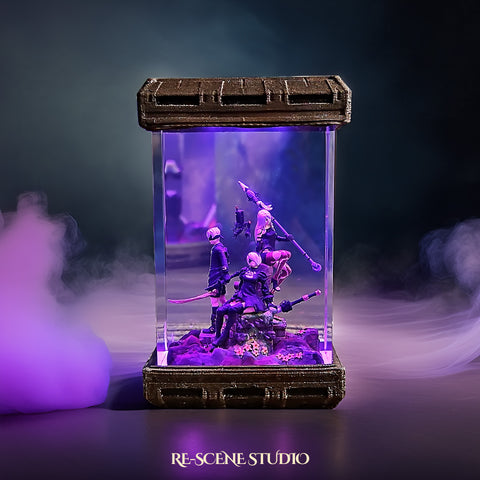
Every lamp we create carries a piece of our heart — a small universe of light, resin, and imagination, handcrafted in our workshop for someone across the world who shares our love for these stories.