



Clair Obscur Expedition 33: What Makes This RPG Special

Most RPGs announce themselves loudly. Big franchise names, familiar art styles, combat systems borrowed from predecessors with a few new layers on top. Clair Obscur: Expedition 33 did almost none of that. It arrived from a small French studio named Sandfall Interactive, showed a trailer built around art nouveau aesthetics and turn-based combat that looked different enough to stop people scrolling, and then accumulated a remarkable amount of genuine enthusiasm from a genre that has seen everything.
The question worth answering before you commit to it: what actually makes this game special, and is it special for you specifically? Not every well-reviewed RPG earns its praise for reasons that translate across all players. This piece breaks down the specific qualities that make Expedition 33 stand out, where it struggles, and who it's built for.
The World: Art Nouveau Meets Belle Epoque With a Twist
The first thing most people notice about Clair Obscur is what it looks like. The art direction draws from French Belle Epoque aesthetics, the period roughly from 1871 to 1914 characterized by ornate architecture, elaborate ironwork, and a visual optimism that was about to get destroyed by the First World War. Art nouveau took that sensibility and pushed it into flowing organic forms, asymmetrical structures, and an obsession with the beauty of nature rendered in metal, glass, and paint.
Sandfall Interactive uses this as a starting canvas and then does something unexpected with it. The world of Lumière, where the game takes place, has clearly been through a catastrophe. The Belle Epoque splendor is present in the architecture and visual language, but it's layered over a dying civilization. Buildings that should be grand and functioning are crumbling. The Paintress, the game's central antagonist, erases entire age groups of humanity annually by painting a number on her monolith. Any person who has reached that age vanishes. The expedition of the title is humanity's attempt to reach her and stop the cycle.

This premise gives the world a quality you don't get in most RPGs: genuine urgency that is also genuinely sad. Every character you meet is aware of when they're going to be erased. The world builds culture, relationships, and meaning anyway. It's a meditation on mortality wrapped in art nouveau paint, and it works because the visual design constantly reinforces the thematic content. Beauty that is decaying. Elegance that is running out of time.
The Combat: Turn-Based With Real-Time Consequences
Turn-based combat has a reputation problem in 2026. A lot of players who grew up with it find it slower than they remember, and a lot of younger players avoid it entirely in favor of action RPGs. Expedition 33 addresses this in an interesting way: it keeps the turn structure but introduces real-time dodge and parry mechanics that operate within your turn.
When an enemy attacks, you have a reaction window to dodge, parry, or counter. Successful parries generate additional resources for your next turn. Failed dodges take full damage. The system means that even during an opponent's turn, you're actively playing rather than watching. It's a mechanic borrowed partly from games like Undertale and Omori at the conceptual level, but implemented with significantly more technical depth.
The result is combat that rewards player attention without punishing players who prefer a more methodical pace. You can play the reaction system conservatively, taking some hits and building your strategy, or you can play aggressively, landing perfect parries repeatedly and building resource stacks that enable high-damage burst turns. Both approaches work. The game doesn't force you into one.
Skill trees are tied to individual party members, and the game does something smart with party composition: certain ability combinations between characters create synergies that aren't explained anywhere in the game. Discovering them through experimentation is part of the experience. Reddit's Expedition 33 community has been cataloging these since launch, and some of the combinations players have found are dramatically more powerful than anything the game surfaces in tutorials.
The Characters: Grief as a Central Mechanic
Gustave is the expedition leader, a man who has already watched people he loves get erased and has decided to spend whatever time he has left trying to stop it from happening again. He's not a triumphant hero. He's someone operating under a specific kind of exhaustion that anyone who has experienced ongoing loss will recognize.
Maelle, the other central character, processes the same world through a different lens. Where Gustave is methodical and driven by duty, Maelle is more reactive, more emotional, and ultimately more honest about how frightened she is. The writing between them avoids the mentor-student dynamic that this kind of pairing usually defaults to. They need each other in specific ways that change as the story progresses.
The wider cast includes characters whose relationship to the Paintress and the erasure system is more complicated than simple opposition. Some have accommodated it. Some have found ways to profit from the predictability of it. The game doesn't use these as simple villains. They're people who made different choices under the same impossible circumstances, and the writing extends them enough grace that their reasoning holds.

What the Reviews Actually Mean
Expedition 33 has landed in the 88-92 range on Metacritic depending on platform, which puts it in the category of games that reviewers agree are excellent but that you should still qualify for your own tastes. The consistent praise is for: visual design (near universal), narrative ambition (strong majority), combat system (strong majority with a minority who still prefer pure turn-based). The consistent criticisms are: some pacing issues in the second act, limited side content compared to open-world RPGs, and a story that requires genuine engagement rather than passive following to land.
That last point is worth sitting with. Expedition 33 is not a game that delivers its themes transparently. The story about mortality, the value of time, and what it means to build meaning under a death sentence is present in every cutscene, but it doesn't underline itself repeatedly. Players who are running through dialogue to get to the next combat encounter will miss most of what makes the game work. Players who are reading everything and sitting with the character moments will find it considerably more affecting than most RPGs of the last five years.
Comparing Expedition 33 to Similar RPGs
| Game | Combat Style | Narrative Depth | Art Direction | Best For |
|---|---|---|---|---|
| Clair Obscur: Expedition 33 | Turn-based + real-time reactions | High, thematic | Art nouveau, painterly | Players who want story with mechanical depth |
| Baldur's Gate 3 | Turn-based, tactical | High, player-driven | Dark fantasy realism | Players who want tactical freedom and agency |
| Final Fantasy XVI | Action, spectacle-focused | Medium, linear | Dark medieval fantasy | Players who prefer action over tactics |
| Persona 5 Royal | Turn-based, social sim | High, character-focused | Stylized, graphic | Players who want character bonds + strategy |
| Sea of Stars | Classic turn-based | Medium, nostalgic | Pixel art, retro | Players who want pure turn-based nostalgia |
The Music: Where Expedition 33 Surpasses Its Budget
Sandfall Interactive is a small studio, and Expedition 33 was made on a budget that most AAA publishers would classify as a rounding error. This makes the score genuinely surprising. The composer Lorien Testard built an orchestral soundtrack that draws on late Romantic French classical music, Debussy and Ravel territory, and uses it to carry the emotional weight of scenes that don't over-explain themselves.
Several tracks from the game have been shared independently on YouTube and Spotify and accumulated meaningful listener counts outside of people who have played it, which is a fairly reliable signal that the music is doing something beyond just accompanying the game competently. The battle themes in particular have attracted attention from players who don't usually notice video game music because they're structured more like concert pieces than looping background tracks.
The French cultural touchstones in the score also reinforce the world-building in a way that's harder to articulate but easier to feel. A game set in a Belle Epoque-inspired civilization that sounds like a French impressionist composed the score creates a coherence between visual and audio design that more expensive games with licensed or generic orchestral music don't achieve.
Who Should Play It (And Who Probably Won't Enjoy It)
Expedition 33 is specifically built for players who:
- Find narrative and character development as important as combat mechanics
- Are comfortable with games that ask them to read and pay attention to subtext
- Have some tolerance for turn-based structure, even if they don't love pure turn-based games
- Appreciate visual distinctiveness and art direction as part of the game experience
- Are looking for an RPG with genuine thematic ambition rather than genre comfort food
It is probably not the right game for players who:
- Want to skip cutscenes and focus purely on mechanical progression
- Need the open-world density of content that games like Elden Ring or Tears of the Kingdom provide
- Find French cultural aesthetics distancing rather than appealing
- Strongly prefer pure action combat with no turn-based elements
The honest trade-off is content density. Expedition 33 is a relatively focused experience. It runs around 40-50 hours for a thorough playthrough, which is long by general standards but short compared to games like Baldur's Gate 3 or Persona 5 Royal. What it offers in exchange is precision. There isn't much filler. The scenes that are in the game are in the game because they matter.
For Fans Who Want to Bring the World Home
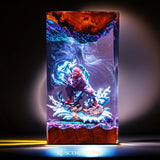
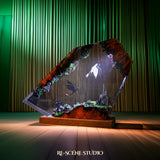
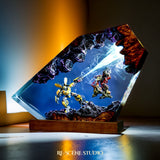
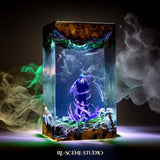
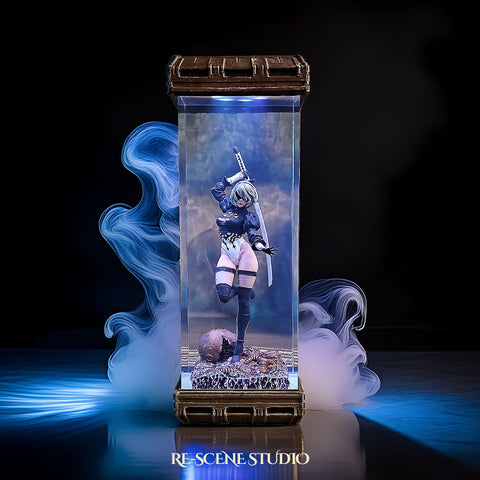
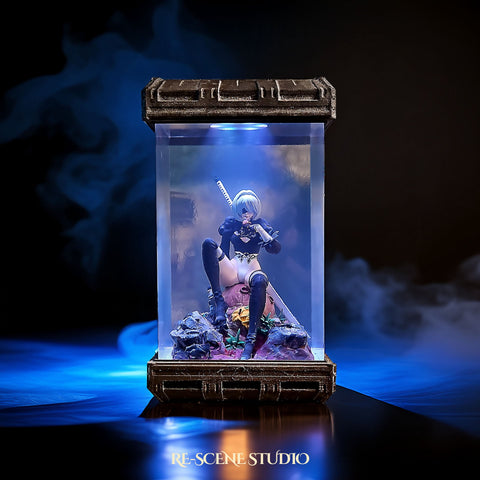
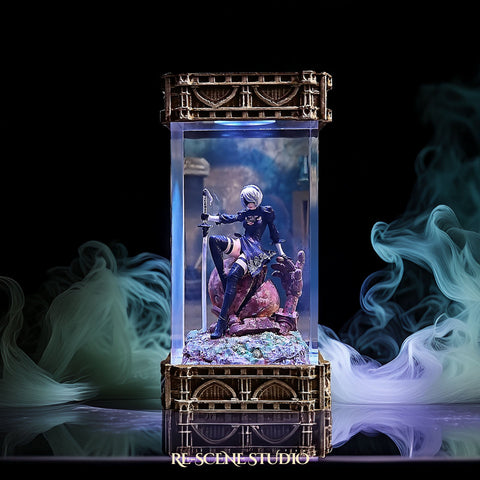
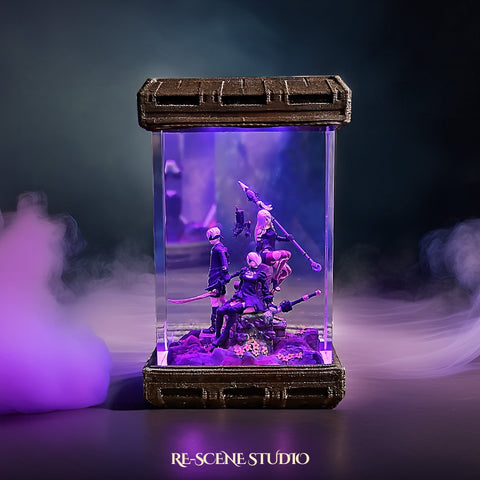
Expedition 33's art nouveau aesthetic and its central characters have resonated strongly enough that collectors and fans have been looking for physical representations of the game's visual world. Our artisan workshop handcrafted resin lamps inspired by Gustave and Maelle, capturing the expedition's narrative and aesthetic in glowing resin art.


Each lamp is handcrafted to order by our artisan workshop with no two pieces identical. They're made for fans who want a physical piece of the world on their desk or shelf, something that holds the aesthetic of the game rather than just a generic piece of licensed merchandise.
If you're interested in games with similarly deep lore and striking visual worlds, our piece on Dark Souls lore for beginners covers another landmark in narrative-through-environment design, for players who find Expedition 33 opens them up to that approach.
Frequently Asked Questions
Featured Resin Lamps
Handcrafted with care, each one unique
Every lamp we create carries a piece of our heart: a small universe of light, resin, and imagination, handcrafted in our workshop for someone across the world who shares our love for these stories.