





Accent vs Task vs Ambient Lighting Explained

Walk into a hotel lobby and the lighting feels effortless. Walk into most apartments and the lighting feels like a dentist's office. The difference isn't budget. It's understanding that "good lighting" isn't one light. It's three types of lighting working together.
Interior designers call them the three layers: ambient, task, and accent. Every well-designed room uses all three. Most homes use only one (the overhead fixture) and wonder why the space feels flat. This guide breaks down what each type does, where to place them, and how to combine them in every room of your home.
What Is Ambient Lighting?
Ambient lighting is the base layer. It's the general illumination that lets you see the room and navigate safely without squinting or bumping into furniture. Think of it as the "background" light that fills the space evenly.
Common sources: Ceiling-mounted fixtures, recessed (can) lights, chandeliers, large pendant lights, and track lighting pointed at the ceiling. Natural light from windows also counts as ambient during the day.
Color temperature: Warm white (2700K to 3000K) for living rooms, bedrooms, and dining areas. Neutral white (3500K to 4000K) for kitchens, bathrooms, and home offices.
What it does well: Provides a comfortable base level of light so you can move through the space, see other people, and feel oriented. Without ambient light, a room feels like a cave with spotlights.
What it can't do: Ambient lighting alone creates a flat, shadowless environment. It doesn't highlight anything specific or provide enough brightness for close-up tasks like reading or cooking. That's why rooms with only an overhead fixture feel "fine but boring."
What Is Task Lighting?

Task lighting is focused, directional light designed for specific activities. It's brighter than ambient light but covers a smaller area. The goal is to illuminate the surface or object you're working with without flooding the entire room.
Common sources: Desk lamps, adjustable reading lights, under-cabinet kitchen strips, vanity mirror lights, pendant lights over kitchen islands, and floor lamps positioned behind reading chairs.
Where you need it:
- Kitchen: Under-cabinet strips that light the countertop, pendant lights over the island
- Home office: Adjustable desk lamp positioned to reduce screen glare
- Bathroom: Vanity sconces or a backlit mirror for grooming
- Bedroom: Bedside reading light (swing-arm wall mount or clip-on)
- Living room: Floor lamp behind a reading chair or sofa
Key buying tip: For task lighting, CRI (Color Rendering Index) matters more than brightness. A CRI of 90 or higher means colors appear accurate under the light, which is critical for makeup application, cooking, and art. A CRI below 80 makes everything look slightly "off." For a full breakdown, read our guide on what CRI is and why it matters.
What Is Accent Lighting?

Accent lighting is the decorative layer. It draws attention to specific objects, architectural features, or textures in a room. It's the layer that turns a space from "functional" to "interesting." Most homes are missing this layer entirely, which is why most rooms feel flat even when they're well-furnished.
Common sources: Track lights or spotlights aimed at artwork, LED strips behind shelves or under furniture, picture lights above paintings, toe-kick lights under kitchen cabinets, uplights behind tall plants, and small decorative accent pieces on shelves.
The 3:1 rule: Effective accent lighting should be about 3 times brighter than the ambient light on the object it's highlighting. This contrast is what creates visual drama. If the accent light is the same brightness as ambient, nothing stands out.
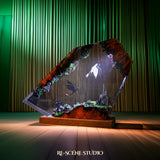
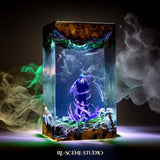
One popular accent lighting option is handcrafted resin art. These pieces produce a warm, diffused glow that highlights the miniature scene inside while casting soft ambient light on the surrounding shelf or desk surface.

How All Three Work Together

The magic happens when all three layers overlap. Here's what a well-lit room looks like in practice:
Bedroom example: Recessed ceiling lights on a dimmer (ambient) set to 30%. A swing-arm wall light for reading in bed (task). A small decorative glow piece on the dresser (accent). At 10 PM, the ceiling lights are nearly off, the reading light is focused on your book, and the accent piece provides a soft navigational glow. At 8 AM, the ceiling lights are at 70%, the reading light is off, and natural light fills the ambient role.
Living room example: A central pendant or flush-mount fixture (ambient) at comfortable brightness. A floor lamp behind the sofa (task) for reading or scrolling. Track lights aimed at a gallery wall (accent) to highlight art and photos. At night, dimming the ambient while keeping the accent creates an intimate atmosphere for movie watching or conversation.
Kitchen example: Recessed ceiling lights (ambient) across the full ceiling. Under-cabinet LED strips (task) illuminating the countertop. Pendant lights over the island serve double duty as both task and visual accent. A toe-kick light strip under base cabinets (accent) adds depth and helps with late-night snack runs.
Quick Comparison: All Three Types of Lighting
| Feature | Ambient | Task | Accent |
|---|---|---|---|
| Purpose | General room illumination | Focused activity support | Decorative highlighting |
| Coverage area | Entire room | Specific work surface | Specific object or feature |
| Brightness level | Moderate, even | Bright, focused | Varies (3x ambient on target) |
| Common fixtures | Ceiling lights, recessed cans | Desk lamps, under-cabinet strips | Track lights, LED strips, art lights |
| Best color temp | 2700K to 3500K | 3000K to 4000K | 2700K to 3000K (warm) |
| What happens without it | Room feels like a cave | Eye strain during activities | Room feels flat and boring |
Room-by-Room Lighting Guide
Not sure which types of lighting to prioritize? Here's a practical breakdown by room:
Bedroom
Priority: ambient (dimmed) + task (reading) + accent (decorative). Accent matters most here because bedrooms are for relaxation, not productivity. Start with a ceiling fixture on a dimmer for ambient. Add a bedside reading light (swing-arm wall mount saves nightstand space). Finish with a small decorative piece on the dresser for accent glow. The combination creates a space that supports everything from getting dressed to winding down for sleep.
Kitchen
Priority: task (countertop, island) + ambient (ceiling). Task matters most because kitchens involve knife work, heat management, and food preparation where accurate color rendering is critical. Under-cabinet LED strips are the single best upgrade for kitchen task lighting. They illuminate the countertop without shadows from your body blocking the overhead light. A pendant over the island adds both task and visual accent.
Living Room
Priority: ambient + accent + task (optional reading corner). Accent matters most because living rooms are display spaces where guests form their first impression. Track lighting aimed at artwork, LED strips behind a media console, or a decorative piece on a shelf adds the visual depth that makes a living room feel designed rather than just furnished.
Home Office
Priority: task (desk) + ambient (ceiling). Task matters most because screen glare and eye strain directly affect your productivity and comfort during long work sessions. Position your desk light to the side (not directly behind the screen) to avoid reflections. A bias light behind the monitor reduces eye fatigue during evening work.
Bathroom
Priority: task (vanity) + ambient (ceiling) + accent (optional). The vanity area needs even, shadow-free task lighting for grooming. Side-mounted sconces at eye level are better than an overhead bar. For a complete guide to bathroom-specific lighting strategies, read our article on bathroom lighting ideas that set the right mood.
Common Mistakes When Layering Light
Using only overhead fixtures. Ceiling lights provide ambient coverage but nothing else. Adding even one table or floor fixture at a different height immediately adds dimension and warmth.
Mixing wildly different color temperatures. A 2700K warm bulb next to a 5000K daylight bulb creates a visual clash that makes the room feel disjointed. Keep all fixtures within the same 500K range for a cohesive look.
Skipping dimmers. A $20 dimmer switch turns fixed lighting into adjustable lighting. It's the cheapest way to give yourself ambient control throughout the day. Full brightness for morning energy, half for evening conversation, quarter for movie night. Most LED bulbs are now dimmable, but always check the packaging before assuming.
Over-lighting the room. More fixtures doesn't mean better lighting. A room with six identical ceiling spots is over-lit, not well-lit. The goal is contrast and variety between layers, not maximum brightness everywhere. If your room has no shadows at all, it's probably missing accent depth.
The common thread: every room needs at least ambient and one other layer. Two layers is "good." Three layers is "this room feels like it was professionally designed." To learn what NOT to do, check out our article on 5 lighting mistakes that make any room look cheap.
Frequently Asked Questions
Related Reading
Want to see what we make? Browse the Wireless Lamps collection.
Featured Resin Lamps
Handcrafted with care, each one unique
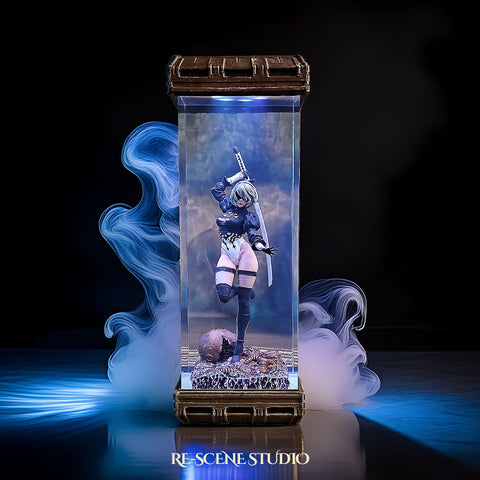

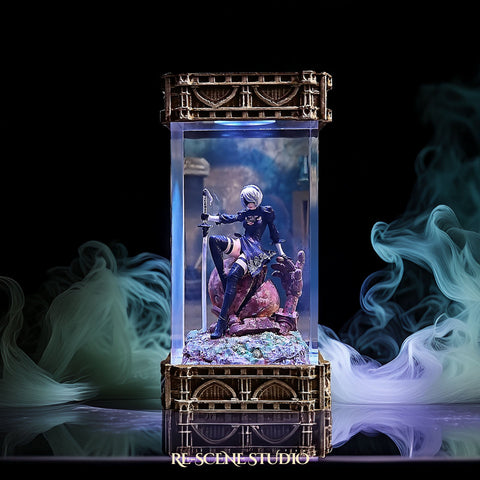

Every lamp we create carries a piece of our heart: a small universe of light, resin, and imagination, handcrafted in our workshop for someone across the world who shares our love for these stories.