



10 Hidden Details in Studio Ghibli Films You Missed

Studio Ghibli films don't just tell stories. They hide them. Every background painting, every throwaway prop, every shift in color carries meaning that most viewers miss on a first watch. Miyazaki and his team layered these movies with details so subtle that fans are still discovering new ones decades later.
These are 10 of the best studio ghibli hidden details, pulled from some of the most beloved films in the catalog. Some are visual tricks. Some are narrative breadcrumbs. All of them will make you want to hit play again.
Spirited Away
Spirited Away is arguably Miyazaki's most layered film. It operates on multiple levels simultaneously, blending Japanese mythology, economic commentary, and a deeply personal coming of age story. These details sit just beneath the surface.


1. Chihiro's Hair Tie Is a Protection Charm
When Zeniba gives Chihiro a hair tie near the end of the film, it seems like a simple parting gift. But watch carefully: the hair tie glints with a faint purple glow. In Japanese folklore, objects gifted with genuine affection can serve as protective charms. That hair tie is the reason Chihiro can walk back through the tunnel without forgetting everything.
Earlier in the film, Chihiro's original hair tie (a plain elastic) breaks. This isn't random. It symbolizes the severing of her connection to the human world. Zeniba's replacement restores that connection, but stronger.
2. No-Face Mirrors Whoever He's Around
No-Face is often read as a symbol of greed or loneliness. But the real detail is more specific: he reflects the personality of whoever he's closest to. Around the bathhouse workers who are obsessed with gold, No-Face becomes a ravenous consumer, devouring everything in sight.
But around Chihiro, who treats him with quiet kindness, he becomes calm and helpful. By the time they reach Zeniba's cottage, No-Face is peacefully spinning thread. He's not inherently evil or good. He's a mirror.
3. The Food That Traps Chihiro's Parents Is Specifically Themed
The feast that Chihiro's parents gorge on at the beginning isn't random street food. The dishes are elaborate, ceremonial offerings, the kind traditionally left for spirits at Japanese shrines. Chihiro's parents are literally eating food meant for gods. The transformation into pigs isn't just punishment for gluttony. It's a consequence of consuming something sacred without permission or gratitude.
Miyazaki confirmed in interviews that this scene was inspired by Japan's economic bubble era, where overconsumption without thought for consequences defined an entire generation.
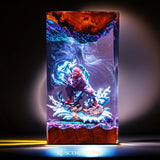
If Spirited Away's layered symbolism resonates with you, the Haku Resin Lamp captures that same dreamlike quality. Haku in dragon form, spiraling through clouds with soft blue LED light diffusing through the resin. It's one of the most visually striking pieces in the Ghibli collection.
Howl's Moving Castle
Howl's Moving Castle is a love story disguised as an adventure, and its hidden details are almost entirely about emotional transformation. The visual design shifts constantly to reflect the characters' inner states.


4. Howl's Hair Color Tracks His Emotional State
This one hides in plain sight. Howl's hair starts blond (his vain, self-protective persona), turns black when Sophie accidentally disrupts his bathroom potions (his real, vulnerable self), and shifts toward darker, more birdlike tones as he loses himself to the war. His physical appearance is a direct readout of his emotional health.
The famous scene where Howl throws a tantrum over his hair color isn't just comedy. It's the moment he starts losing control over the mask he's built.
5. The Castle Itself Changes Shape Based on Who Lives There
Howl's castle is cobbled together, chaotic, and barely functional at the start of the film. As Sophie cleans, organizes, and brings warmth to the household, the castle literally transforms. Rooms become tidier. The exterior becomes less threatening. By the end, the castle has evolved into something gentler and more cohesive.
This isn't just set dressing. The castle is a metaphor for Howl himself: messy, guarded, and falling apart on the outside, but capable of becoming something beautiful when someone cares enough to stay.
6. Sophie's Age Fluctuates Throughout the Film
Most viewers notice that Sophie is cursed to look old. Fewer notice that her apparent age shifts scene by scene, sometimes within the same conversation. When Sophie feels confident, brave, or emotionally open, she appears younger. When she retreats into self-doubt, she ages again.
The curse doesn't just make her old. It makes her look the way she feels about herself. Sophie's low self-esteem is the real curse, and the witch's spell merely makes it visible.
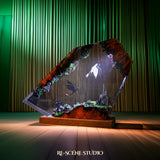
The Howl's Moving Castle Resin Lamp captures the castle in three dimensional resin with warm LED lighting that feels like Calcifer is burning inside. It's a favorite among Ghibli collectors for its level of sculptural detail.
My Neighbor Totoro
Totoro feels like the simplest Ghibli film on the surface. Two girls move to the countryside and meet forest spirits. But the simplicity is deceptive. Totoro is dense with environmental storytelling and cultural symbolism.


7. The Camphor Tree Is a Real Sacred Species
The massive tree where Totoro lives isn't just any tree. It's a camphor tree (kusunoki), a species considered sacred in Shinto tradition. Many real camphor trees in Japan are designated as natural monuments and are believed to house spirits. The shimenawa rope around the tree's trunk in the film is the traditional marker for a sacred dwelling.
Miyazaki didn't invent the idea of spirits living in ancient trees. He animated a belief that millions of Japanese people grew up with.
8. Mei's Name Comes from the English Word "May"
Both sisters' names reference the month of May. Satsuki is the traditional Japanese word for the fifth month, and Mei is derived from the English "May." This wasn't accidental. The film is set in May, and the name doubling reinforces the idea that the sisters are two halves of the same experience, processing their mother's illness from different emotional angles.
The Totoro Resin Lamp translates the forest spirit's gentle presence into a calming desk piece with soft LED light filtering through layered green resin. It captures the same peaceful energy that makes Totoro so enduring.
Princess Mononoke
Princess Mononoke is Miyazaki's most morally complex film. There are no villains, only competing survival instincts. The hidden details reinforce this ambiguity at every turn.
9. The Forest Spirit's Face Is Deliberately Uncanny
The Shishigami (Forest Spirit) has a humanlike face on a deer's body, and that face was designed to feel unsettling. Miyazaki instructed his animators to avoid making the Forest Spirit look friendly or hostile. It simply exists, beyond human categories of good and evil.
The slight smile, the unblinking eyes, the way it walks silently through grass that grows and dies under each footstep: every design choice emphasizes that this being operates on a scale humans cannot comprehend. It doesn't care about Ashitaka's quest or Lady Eboshi's ambitions. It just is.
Other Ghibli Films
Miyazaki isn't the only master at hiding details. The broader Ghibli catalog, including works by Takahata and Yonebayashi, is filled with blink-and-miss-it touches.
10. Ponyo's Waves Are Hand-Animated Homages to Hokusai
During Ponyo's storm sequence, the ocean waves take on a distinctly stylized form: curling, foaming crests that look like living creatures. These aren't generic wave animations. They're direct visual references to Katsushika Hokusai's famous woodblock print, "The Great Wave off Kanagawa."
Studio Ghibli's animation team hand drew every frame of this sequence. No CGI, no shortcuts. Over 170,000 individual drawings went into Ponyo's production, making it one of the most labor intensive animated films ever created. The wave sequence alone required months of work from the studio's top animators.
Frequently Asked Questions
Every Rewatch Reveals Something New
That's the magic of Studio Ghibli. These films don't age because they were never designed to be consumed once and discarded. They were built to be lived in, revisited, and rediscovered. The hidden details aren't bonus content. They're the point.
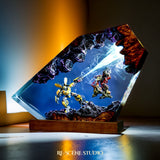
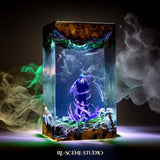
If you want to bring a piece of that Ghibli magic into your space, explore the Studio Ghibli resin lamp collection at Rescene Studio. Each lamp is handcrafted by our artisan workshop, capturing scenes from these films in three dimensional resin with warm LED lighting.
Featured Resin Lamps
Handcrafted with care, each one unique
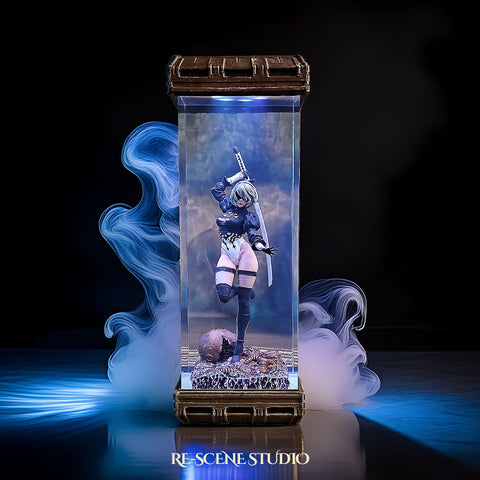
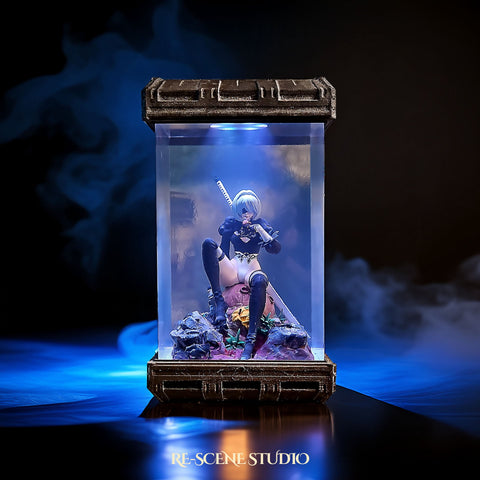
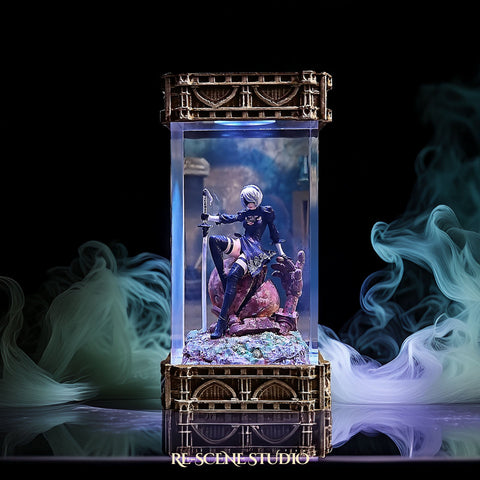
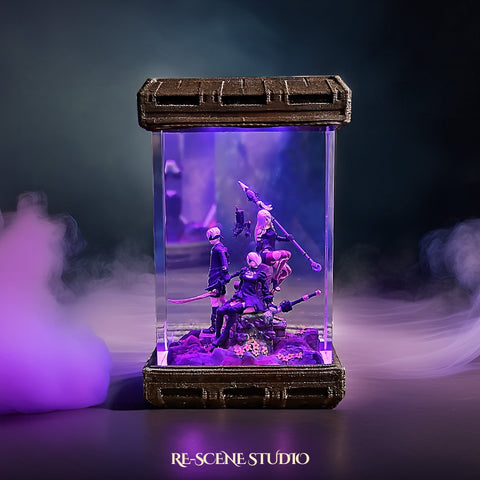
Every lamp we create carries a piece of our heart: a small universe of light, resin, and imagination, handcrafted in our workshop for someone across the world who shares our love for these stories.