






![[FATHER'S DAY] Ember Glow Ticket | $6.68 — Handcrafted Epoxy Resin LED Lamp | Unique Ambient Decor & Collector's Gift](http://rescenestudio.com/cdn/shop/files/Lucky_Star_Ticket_NYE_2026_c61361fc-ea06-4a31-8379-e16ed7d47902.jpg?v=1767177179&width=320)


Minimalist Room Design: Do More with Less

You cleared the clutter.. Donated three bags of stuff.. Rearranged what was left.. And now your room looks...
empty. Not calm. Not curated. Just bare walls and a lonely sofa wondering where everything went.
That "empty room" problem is the number one reason people abandon minimalist room design halfway through. They follow the "less is more" advice literally, remove everything, and end up with a space that feels cold instead of calm. The fix isn't adding stuff back. It's understanding what minimalism actually means in practice.
Minimalist room design is about intentionality, not deprivation. Every item earns its place because it serves a function, brings comfort, or adds genuine beauty. The result is a room that feels spacious and calm but never barren. Here's how to get there without turning your home into a showroom nobody wants to sit in.
What Minimalism Actually Means in 2026
The cold, all-white, Instagram-perfect minimalism of 2018 is dead.. In 2026, designers are calling the dominant trend "warm minimalism": clean lines remain, but natural textures, warm color palettes, and cozy lighting soften the edges.. Think mushroom beiges instead of stark whites.. Boucle sofas instead of flat leather.
Wooden shelves instead of glass.
The shift happened because people realized that minimalism needs to work for real life. A pure white room with one chair looks amazing in a photo. It's miserable to live in. Warm minimalism keeps the decluttered foundation but layers in enough texture, warmth, and personality to make the space feel human.

The 5 Principles of Minimalist Room Design
1. The "Would I Move This?" Test
Before keeping or buying anything, ask: "If I moved to a new place tomorrow, would I pack this?" If the answer is no, it doesn't belong in a minimalist room. This test is more honest than the popular "Does it spark joy?" because it accounts for practicality and cost, not just sentiment.
2. One Statement Piece Per Room
Minimalist rooms need a focal point. Without one, the eye wanders and the space feels unresolved. Choose one item to be the "star" of each room: a unique light fixture, a piece of art, an accent chair in a bold texture, or a handcrafted decorative object. Everything else supports the star, never competes with it.
3. Hidden Storage Is Non-Negotiable
Minimalism collapses without storage. Everyday objects (mail, keys, chargers, remotes) end up on surfaces, and the whole effect disappears. Built-in storage, floating shelves with baskets, and closed-door cabinets are what make minimalism sustainable. Rule of thumb: build in 30% more storage than you think you need before worrying about decor.
4. Texture Replaces Quantity
When you remove objects, you need to add texture to compensate. A room with ten things in five different textures feels richer than a room with thirty things in one texture. Layer linen throws, natural wood, woven rugs, and matte ceramics. The contrast between materials creates visual depth without visual clutter.
5. Lighting Does the Heavy Lifting
In a minimalist room, lighting becomes 3x more important because there's less to distract from it. A single harsh overhead light in a minimalist room feels like a hospital. Layered lighting (ambient, task, accent) gives a minimalist room the warmth it needs. One floor lamp and one decorative accent light can completely transform how the space feels after sunset.
If you want to understand the science behind lighting layers, read our guide to 5 lighting mistakes that make any room look cheap.
Minimalist Color Palettes That Work
Color choice is where most minimalist rooms succeed or fail. The wrong palette feels sterile. The right one feels deliberate.
| Palette | Base Colors | Accent | Best For |
|---|---|---|---|
| Warm Neutral | Cream, beige, warm gray | Terracotta or olive | Living rooms, bedrooms |
| Japandi | Soft white, light oak | Charcoal or forest green | Home offices, studios |
| Monochrome Warm | Taupe, mushroom, latte | Brass or warm copper | Bathrooms, entryways |
| Earth Tone | Sand, clay, stone | Deep teal or burnt sienna | Dining rooms, dens |
The 60-30-10 rule works well for minimalism: 60% of the room is your dominant neutral, 30% is a secondary neutral that adds depth, and 10% is a single accent color that gives the eye a resting point. Avoid more than one accent color per room; it defeats the purpose.

Room-by-Room Minimalist Playbook
Living Room
Keep: a sofa, a coffee table, one side table, one lamp, one piece of wall art.. That's it for furniture.. Add a throw blanket for texture and one plant for organic color.. The floor should be at least 60% visible.
If you can't see the floor, the room isn't minimalist yet, no matter how curated the items are.
Arrange furniture to create a clear traffic path. In minimalist spaces, negative space (the empty areas) is just as designed as the furniture placement. Leave at least 30 inches between furniture pieces for comfortable movement. The openness isn't wasted space; it's breathing room that makes the whole room feel larger.
Bedroom
The bed is the focal point.. Frame it with matching nightstands and one light source on each side (wall sconces save surface space).. Remove the dresser if possible; use a closet system instead.. Nightstands should hold one item each: a lamp, a book, a glass of water.
Not all three.
Bedding matters enormously.. A wrinkled duvet in a minimalist bedroom draws the eye immediately because there's nothing else to look at.. Invest in structured, quality bedding in a neutral tone.. A linen duvet cover in warm white or soft clay adds texture while keeping the visual clean.
This is the one item worth spending more on.
Home Office
Cable management is the invisible detail that separates "minimalist" from "messy with less stuff." Use cable trays, Velcro wraps, and under-desk mounts to hide every wire. Your desk surface should hold your monitor, keyboard, and one personal item. Everything else goes in drawers.
If you work from home, consider a single floating shelf above your desk instead of a full bookcase. It holds the essentials (a reference book, a small plant, one decorative object) without the visual weight of a full shelving unit. Wall-mounted organization keeps the floor clear, which is the foundation of any minimalist space.
Kitchen
Clear the countertops. The only items that should live permanently on kitchen counters are things you use daily: coffee maker, knife block, cutting board. Everything else goes in a cabinet. This one change makes the biggest visual difference in any minimalist kitchen.
Matching containers for pantry staples (flour, sugar, rice) replace the visual chaos of twenty different branded packages. Spend $20 on a set of uniform jars and your pantry shelf looks like a design magazine overnight. The same principle applies to the fridge: clear containers, labels facing forward, grouped by type.
The Role of Light in Minimalist Spaces
Minimalist rooms amplify lighting. With fewer objects absorbing or reflecting light, the quality, color, and placement of your light sources become the primary mood-setter. Natural light during the day is the foundation. At night, you need intentional artificial light that replicates that warmth.
Accent lighting matters more in minimalist spaces because it serves as decoration. A single handcrafted accent lamp on a shelf or nightstand becomes both a light source and a sculptural object, fulfilling the "one statement piece" principle while adding functional warmth.

In a minimalist space, decorative lighting doubles as art. A handcrafted resin lamp with a scene sealed inside serves as both a functional light source and a conversation-starting focal point. Unlike generic table lamps, each piece has visual depth that rewards close inspection, making it ideal for rooms where every object needs to justify its presence.
Minimalism on a Budget
Minimalism is often cheaper than maximalism. You're buying fewer things, just choosing them more carefully. Here's a practical budget breakdown for making a standard living room feel minimalist:
| Action | Cost | Impact |
|---|---|---|
| Declutter (donate/sell excess) | Free (or profitable) | Highest impact |
| Repaint walls (warm neutral) | $50-100 | High |
| One accent lamp or light fixture | $30-90 | High |
| One woven throw or textured pillow | $20-40 | Medium |
| Cable management kit | $15-25 | Medium |
| One indoor plant | $10-30 | Medium |
| Total | $125-285 |
The most expensive part of minimalism isn't buying new things.. It's letting go of things you paid for.. Sunk cost bias is the real enemy here.. If something doesn't earn its spot, its price tag doesn't matter.
Selling items on Facebook Marketplace or Poshmark can actually fund your minimalist upgrades, turning clutter into capital.
For more budget-friendly transformation ideas, check out our guide on how to make any room feel cozy on a budget.
What Minimalism Is Not
A few honest clarifications, because the internet gets these wrong constantly:
- Minimalism is not empty. If your room feels barren, you've gone too far. Add texture and warmth.
- Minimalism is not cheap-looking. Fewer items means each one matters more. One good lamp beats five forgettable ones.
- Minimalism is not all-white. Warm neutrals, earth tones, and even deep accent colors work beautifully.
- Minimalism is not permanent. It's a moving target. Reassess every season. What serves you changes over time.
- Minimalism is not for everyone equally. Families with small children, hobbyists with gear, and collectors all practice minimalism differently. The principle is intentionality, not a specific item count.

Frequently Asked Questions
Featured Resin Lamps
Handcrafted with care — each one unique


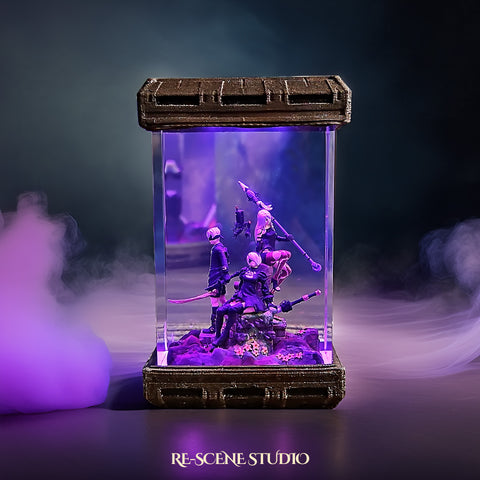
Every lamp we create carries a piece of our heart — a small universe of light, resin, and imagination, handcrafted in our workshop for someone across the world who shares our love for these stories.