






Gifts for Gamers Who Have Everything: What Not to Buy
Gear is picked by feel and games come from their own wishlist, so here is what to skip, why, and what to give instead.
For a gamer who has everything, skip the gear and the surprise games and give something from the world they play in: the art book or soundtrack of a game they replay, a display piece of their favorite character, or an evening of co-op play together. If you do buy a game, take it from their wishlist.
Key takeaways
- Skip headsets, keyboards, chairs and surprise games: gamers choose those by feel and from their own wishlist.
- Check their wishlist or ask a co-op friend before you buy any game.
- Gifts that last come from the world they play in, not the desk they play at.
- Their setup holds clues: the wall art, the wallpaper, the character they play most.
- When the shelf is full, give an evening of play together instead of one more object.
Why is a gamer who has everything so hard to shop for?
A gamer who has everything is a player with a complete setup who buys the next game or gadget the day they want it, so a gift has to come from outside what they buy for themselves. That is why most lists of gifts for gamers who have everything fall flat once you hold them up against one real person. The headset, the controller and the keyboard on those lists are already on their desk, picked out months ago by the one person who knew exactly what they wanted.
So you end up scrolling, unsure, and a little afraid of the polite thank-you that means a gift will never come out of its box. The pull in that moment is toward a surprise, something big and new that gets a reaction when the paper comes off. Research by Jeff Galak and his co-authors, reported by Carnegie Mellon University, found that givers tend to focus on the moment of exchange when they choose a gift. Recipients, the same research found, care more about a gift's long-term usefulness and its practical qualities.1 With someone whose setup is complete, we think that gap matters even more. The reaction lasts a minute, and a gadget meant to replace one they already set up the way they like can end up in a drawer.
The way out is a lane they do not shop in. The desk is where they spend their own money, so a gift does better in the lanes around it: the world their games happen in, the shelf behind the chair, and the time they spend playing with you. The practical steps are our suggestions; the research points come from two university news reports and the game rating board, and we cite each one where it appears.
Which gaming gifts should you skip, and why?
Gear looks like the obvious gift, because it is what every gaming aisle is stacked with. It is also the biggest risk. A mouse, a keyboard or a headset is chosen by feel, by habit and by the setup it has to work with, and the one on their desk is the one they settled on. A new one, however good, asks them to relearn something they already like.
| Skip | Why | Instead |
|---|---|---|
| Peripherals | Picked by feel and habit | An art book of their main game |
| Gaming chair | Fit is personal | A display piece for their shelf |
| Surprise game | May already be in their library | A game from their wishlist |
| New console | Their library lives elsewhere | A gift card for the platform they use |
| New subscription | Asks for hours they spend elsewhere | Time playing their game with them |
| Slogan merch | Reads as generic | A print of a scene they love |
A chair is the same bet as a headset, only bigger, chosen for one person at one desk. If they have named the exact model they want, buying that one is filling a request, not guessing; if they have not, leave gear to them.
Stands and desk organizers are a smaller risk, because they hold the gear rather than replace it. They still have to fit a desk they arranged themselves, so look before you buy. A headset with no hook or a controller with nowhere to rest shows a real gap; if everything already has its place, leave the desk to them too.
A console or a platform they do not play has a different problem. Their library and their friends live on the system they already use, so a new one starts empty and asks them to move a habit they never planned to move. A subscription to a game they do not play asks for something scarcer: hours. Those hours already go to another game, and the subscription turns into one more thing they feel they ought to open.
Slogan merch is the last one: the mug or the shirt with a gamer joke printed on it. It is generic by design, so it says you shopped the gamer aisle rather than for them.
How do you avoid gifting a game they already own?
Buying a game seems like the easy answer until you remember the risk the other gifts do not carry: they may already own it. When a library is mostly digital, there is no shelf of boxes to check. It also grows quietly: a game bought on sale and never started, one that came bundled with another, one a friend gave them last year. They may not remember everything they own, so even asking "do you have this one?" can miss.
Before you buy any game, run through these checks in order:
- Ask for their wishlist first. If they keep one on the store where they buy games, ask to see it: every game on it is one they picked out themselves.
- Ask which system they play on. Their games and friends sit on one platform, and a game bought for another one lands outside the library they actually use.
- Listen for the game they want next. Note the one they say they are waiting for, then look for it on the wishlist. The game they keep mentioning is usually one they already own.
- Ask someone who plays with them. A co-op friend or a sibling often knows the library, and the gap in it, better than you can guess from outside.
If the gamer is a teen, add one more check and make it with their parent: the game's ESRB rating. The ESRB says its rating categories suggest age appropriateness, and it describes content rated T (Teen) as generally suitable for ages 13 and up.2 A game rated above their age is their parent's call. Whatever their age, when none of these checks gives you a clear answer, take that as a sign to give something from the next section instead of a game.
What do gamers keep using long after the holidays?
The gifts that last are the ones still in use after the wrapping is gone. Galak put the fix this way: think about "how valuable gifts might be over the course of the recipient's ownership of them," rather than how much of a smile a gift brings when it is opened.1 For a gamer, the gifts that pass that test tend to sit beside the desk rather than on it, in the world their games happen in:
- The art book of the game they replay. Paintings and sketches from a world they already know, to page through between sessions.
- Its soundtrack on a record. Check first that they own a record player; if they do, the game's music can fill the room with the screen off.
- A cookbook or a map from a game world they love. One gets used in the kitchen, the other goes on the wall, and both tie an ordinary room to the place they spend their evenings.
- A framed print of a favorite scene. The view they stopped to look at in the game, hung where they can see it from the chair.
- A display piece of the character they play or talk about most. A figure, a small statue or a scene for the shelf, chosen for the character rather than for the newest release.

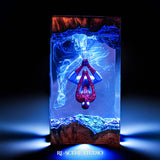
If Elden Ring is a game they replay and Ranni the Witch is the character they talk about most, our Ranni the Witch resin lamp is one way to put that character on the shelf. It is a fan-made, handcrafted piece, and it belongs beside the art book or the print rather than in place of them. Like everything here, it lands when the character is really theirs, and their setup usually shows you which one that is.

What clues does their setup give you?
Next time you are near the corner where they play, take a minute to look around. You are not looking for something to buy yet. You are looking for what they have already chosen, because every choice in that corner tells you something about their taste:
- The art on the wall. A print or a painting points to a game or a style they like enough to look at every day.
- The wallpaper and the avatar. The character on their screen or in their profile picture is often the one they play or talk about most.
- The controller color. A controller in an unusual color suggests they pick their things on purpose, and it shows you a palette they like.
- The cases on the shelf. If they keep physical games, the spines show which series they follow.
- The game they talk about most. The world that comes up over dinner is the one your gift should come from.
- Where the shelf is bare or crowded. A bare spot is room for one thing; a crowded shelf is a sign to give something that takes no space at all.

Even the color the room is lit in is a clue. Someone who keeps their corner in one deep color every evening does it on purpose, and that tells you the look of the space matters to them. Read it the way you read the controller: as a hint about what they like.
If what you find is soft and homey, with blankets, plush and pastel gear, our guide to cozy gamer gifts is written for exactly that kind of setup. If what you find is a shelf with no room left on it, the next section is for you.
What if they don't want one more thing on the shelf?
Maybe the shelf you just looked at is already full of collectibles, and one more object would only add to the dusting. That worry is fair, and it has two good answers: things that get used up, and time.
Things that get used up are the easy half. Stock their next game night with the snacks and drinks you have seen them reach for, not novelty-aisle picks, so it all gets finished instead of kept. A short note naming the game you hope they play that night turns a bag of snacks into a plan.
Time is the bigger half. Ask them to teach you their game for an evening, even if you play it badly. Look for tickets to a game music concert or a convention day if one comes near you. Or pick a co-op game you can both learn from scratch, checked against their wishlist first.
As the University of Toronto reported, research by Cindy Chan found that experiential gifts are more effective than material gifts at improving relationships, from the recipient's point of view.3 The reason, Chan said, is that experiential gifts "tend to be more emotionally evocative." She explained that an experiential gift brings a strong emotional response when the recipient experiences it.3 For a co-op night, that moment is the evening itself.

Someone else on your list may have a full shelf of films instead. For them, our guide to gifts for movie lovers works through the same problem.
How do you ask without spoiling the surprise?
Sometimes the honest shortcut is simply to ask. Someone who already has everything usually knows what they want next, and one good question takes you past the guessing that makes this kind of gift hard. We would rather see you give a gift they hinted at than a surprise they have to be polite about. Asking does not have to give the gift away, either, and a few ways keep part of the surprise intact:
- Ask a narrow question. "Which character would you put on a shelf?" tells you a lot without naming a gift.
- Offer a choice between two. Put two ideas from different lanes side by side, such as an art book and a concert, and they still won't know which one is coming, or whether either is.
- Ask their co-op friend or sibling quietly. The people they play with know their favorite character and can keep the question to themselves.
- Browse the wishlist together. Say you are looking for ideas for someone else, and notice which games they stop on.
Whatever they tell you, write it down somewhere you will find it later. The answer to a narrow question often holds next year's gift as well, and the next time you walk past their setup you will know what to look for.
Which lamp fits them?
Choose a lamp the way you chose everything else here: by the game they replay and the character they play or talk about most, not by the newest release. Browse our video game lamps for the world you spotted on their wall or their screen, and skip any character you are not sure about.
Each lamp is hand-poured to order and finished by hand. Our standard lamps come in sizes M, L and XL, and the size selector on each product page shows that design's exact dimensions, so measure the bare spot on their shelf before you choose. Because hand-poured resin holds small natural variations in color depth and translucency, no two lamps are exactly the same. From our side of the workbench, that small variation is the part we like most about setting a game scene in clear resin.
Whichever one you choose ships worldwide by tracked international courier and arrives gift-ready in protective packaging. For the other people on your list, our gift guides take the same approach: start from the person, and let the object come last.
Frequently asked questions
Sources
- Research Finds Gift Givers Too Focused on "Wow" Factor. Carnegie Mellon University, 2016.
- ESRB Ratings Guides, Categories, Content Descriptors. Entertainment Software Rating Board (ESRB), 2026.
- The science of gift giving: U of T research on the best kind of present to receive. University of Toronto, 2016.
(*) Character names and the works they come from belong to their owners; this article is an independent fan guide, not affiliated with those studios or brands.
Featured Resin Lamps
Handcrafted with care, each one unique


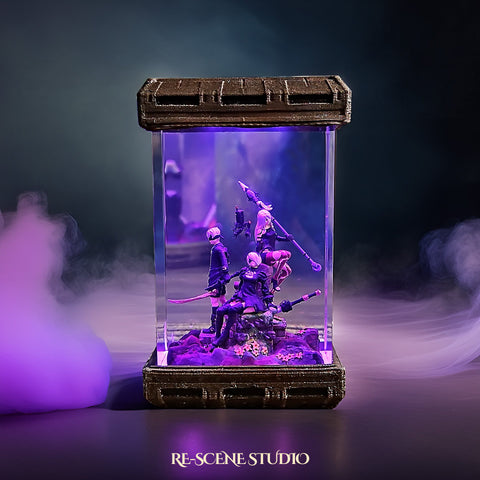
Every lamp we create carries a piece of our heart: a small universe of light, resin, and imagination, handcrafted in our workshop for someone across the world who shares our love for these stories.