






Are Resin Lamps Safe? Complete Guide for Buyers

You found a resin lamp you love. The artwork is gorgeous, the price feels fair, and you can already picture it on the nightstand. Then a small voice in the back of your head starts asking questions. Is it actually safe? Will it overheat? Will the resin off-gas into your bedroom while you sleep? Is it okay around kids or pets?
These are the right questions to ask. Most articles online wave them off in two paragraphs and move on. We are going to walk through every concern carefully, with the actual chemistry, the heat numbers, the certifications that matter, and the red flags that should make you close the tab.
Short answer: yes, a properly made resin lamp is safe for indoor use, including bedrooms and rooms with children. The longer answer is that the safety of any handcrafted lamp depends entirely on who made it and how. By the end of this guide, you will know exactly what to look for so you can buy with confidence.
What a Resin Lamp Actually Is
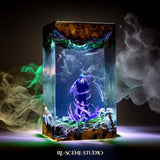
Before we talk about safety, it helps to understand what you are looking at. A resin lamp is a sculpted piece of cured epoxy resin with an LED light source embedded inside or hidden in a base beneath it. The "lamp" part is the LED. The "art" part is the resin sculpture that diffuses and colors the light.
The two ingredients matter for very different reasons. The resin is what you touch and look at. The LED is what generates the light and the heat (or rather, the lack of it). Most safety questions confuse the two, so we will treat them separately.

The Toxicity Question Most Buyers Get Wrong
Are resin lamps safe from a chemical standpoint? The short answer is yes, but this is the single biggest source of confusion in the entire category, and it costs honest makers a lot of customers. The confusion happens because people read about resin safety online and end up looking at warnings written for the people who pour it, not the people who buy the finished piece.
Liquid epoxy resin, in its uncured two-part form, does require ventilation and skin protection during pouring. The artisan working the resin wears nitrile gloves, a respirator, and works in a ventilated space. Once the resin chemically cures, however, it becomes a thermoset polymer. That means it is no longer reactive. It is not "drying" the way paint dries. It has undergone a one-way chemical reaction that locks the molecules into a stable solid.
Cured epoxy is inert. It does not off-gas. It does not smell. It does not leach. It is the same plastic family used in food-contact tableware, dental fillings, and the protective coating on the inside of canned food. The European Food Safety Authority and the FDA both consider fully cured epoxy resin food-safe in those applications (the FDA food-contact substances database documents the relevant exposure thresholds). A finished resin lamp sitting on your nightstand is dramatically less exposure than that.
If a resin lamp ever smells like chemicals when you take it out of the box, that is a sign the resin was not fully cured before shipping. That is a red flag and you should return it. A properly cured lamp has no scent at all.
Are Resin Lamps Safe Around Children and Pets?
Parents and pet owners ask this all the time, so let us be specific. The cured resin itself poses no chemical risk if a child touches it or a curious cat licks it. There is nothing to absorb through skin and nothing volatile to inhale.
The realistic risks are physical, not chemical. A resin lamp is a solid object. If a child throws it, it can crack. If a pet knocks it off a high shelf, it can break. The shards are not sharp like glass, but they should still be cleaned up promptly. Place the lamp where it cannot be easily knocked over and you have addressed the only meaningful risk.
The LED component is also low-risk. Modern LED bulbs run at low voltage (typically 5V or 12V), and the wiring inside a quality lamp is sealed and certified. There is no exposed filament, no high-voltage shock risk, and no glass bulb that can shatter. Compared to a traditional incandescent bedside lamp, a resin lamp is significantly safer in a child's room.

Heat, Fire Risk, and Overnight Use
Are resin lamps safe to leave running overnight? This is the question that worries new buyers the most. The answer comes down to heat. The single biggest practical advantage of LED lamps over traditional bulbs is heat. An old incandescent bulb converted about 90 percent of its electricity into heat and only 10 percent into light, which is why Energy Star phased them out of residential use in favor of LEDs. The bulb surface could reach 200°F or higher. Leaving one against a curtain was a real fire risk.
An LED is the opposite. A typical 5W LED used in a resin lamp generates so little heat that the surface of the resin stays at or near room temperature. After running a quality lamp for several hours, the warmest spot is usually 5 to 10 degrees Fahrenheit above ambient. You can leave your hand on it indefinitely without discomfort. There is no scenario where it ignites bedding, paper, or fabric.
This makes resin lamps completely safe for overnight use. Many buyers actually use them as bedside night lights for exactly this reason. The light is warm and ambient, the heat is negligible, and there is no candle flame to worry about. If you have ever fallen asleep nervous about whether you blew out a candle, a resin lamp solves that problem.
One genuine consideration: keep the lamp on a stable surface. Not because it will start a fire, but because tipping a lamp can damage the LED or crack the resin from the impact. Place it where it lives, plug it in, enjoy.

Certifications and Quality Standards That Actually Matter
Here is where the difference between a quality maker and a sketchy one becomes obvious. The LED component inside any lamp sold in the United States, Europe, or the UK should carry specific safety certifications. These are not optional marketing claims. They are independent third-party verifications that the electronics will not short, overheat, or fail in a dangerous way.
These are the certifications worth checking when you buy. You can verify any specific UL certification number directly through UL Solutions:
| Certification | What it means | Where it applies |
|---|---|---|
| UL Listed | Underwriters Laboratories has tested the LED driver and wiring against US electrical safety standards. | United States, Canada |
| CE Marking | Confirms the product meets European Union health, safety, and environmental requirements. | European Union, UK |
| RoHS Compliant | Restriction of Hazardous Substances. No lead, mercury, cadmium, or other restricted heavy metals in the electronics. | EU, increasingly global |
| FCC Class B | The lamp will not emit electromagnetic interference that disrupts other household electronics. | United States |
| USB-C / 5V DC adapter | Low-voltage operation eliminates shock risk and is the modern standard for small LED fixtures. | Universal |
If a seller cannot tell you which of these certifications their lamps carry, that is a strong signal to look elsewhere. Reputable artisan studios source their LED components from certified suppliers and can answer this question without hesitation.
Cleaning, Maintenance, and Long-Term Safety
A resin lamp is one of the lowest-maintenance pieces of decor you can own, but a few simple habits will keep it safe and beautiful for years. Cured resin does not yellow significantly under indoor LED light. The pigments inside are stable. The risk to long-term appearance is dust and surface scratches, not chemical breakdown.
For cleaning, use a soft microfiber cloth and plain water. Avoid alcohol, acetone, ammonia, and abrasive cleaners. These will not poison anything, but they can dull the surface gloss over time. If a sticky fingerprint needs more, a tiny amount of mild dish soap diluted in water works perfectly. Wipe dry immediately.
Inspect the cable and adapter once or twice a year. If the cable shows fraying or the adapter feels unusually warm, replace the adapter (not the lamp). This is the same maintenance you would do for any small electronic device, and it is the most useful thing you can do for long-term safety.

The Red Flags That Should Make You Close the Tab
Not every resin lamp on the internet is a quality product. The category has attracted plenty of shortcut sellers, and a $20 lamp from a marketplace listing is almost never the same thing as a piece from a real studio. Watch for these warning signs before you buy:
No information about the maker. A reputable studio will tell you who they are, where they ship from, and how to reach them. If a listing has no studio name, no return policy, and no contact information beyond a generic chat box, that is a problem.
No certifications listed. See the table above. If the seller cannot answer a basic question about UL or CE compliance, the LED component may have come from an unverified factory and could overheat or fail.
Suspiciously low prices. A real handcrafted resin lamp takes hours of skilled labor and uses quality materials. If the price seems too good to be true, the maker has cut a corner somewhere. Often it is the LED component, the resin grade, or the curing time, all of which affect safety.
Stock photos that look identical to other listings. If you reverse-image-search the product photo and find it on twenty other stores, you are looking at a dropshipped product with unknown origins. The actual lamp you receive may not match the photo at all.
"Ships immediately" claims on a handmade item. Quality resin work takes time. A studio that promises instant shipping on every piece is either holding mass-produced inventory or the work is not actually handmade.

How Rescene Studio Approaches Safety
So, are resin lamps safe? In general, yes. Here is specifically how we handle every concern raised in this guide. Since we are writing this guide and we sell resin lamps, you deserve to know how we handle every concern in this article. We use commercial-grade epoxy resin from a single trusted supplier and cure every piece fully before it leaves the workshop. Our LED components carry UL and CE certifications and run on low-voltage 5V DC adapters with FCC Class B compliance.
Every piece is handcrafted by our artisan workshop, which is why we recommend ordering well in advance for gift occasions. Each lamp is inspected before packaging, and we test the LED on every unit before it ships. If anything ever goes wrong with the electronics, we replace the LED component free for the first year.

If you want to see exactly how we make each piece, the step-by-step process is documented here. And if you are buying as a gift, our curated under-$100 picks are a good place to start.
Frequently Asked Questions
Are resin lamps safe to leave on overnight?
Yes. The LED inside a quality resin lamp generates almost no heat and uses very little electricity. There is no fire risk from leaving it on overnight, and many buyers use them specifically as bedside night lights. The cured resin around the LED is chemically inert and stays cool to the touch.
Do resin lamps off-gas or smell?
A properly cured resin lamp has no smell at all. Liquid epoxy resin gives off fumes during pouring and curing, but once the chemical reaction is complete, the resin becomes an inert solid that does not release any volatile compounds. If your lamp smells like chemicals out of the box, it was not fully cured before shipping and you should return it.
Are resin lamps safe around children and pets?
Yes. Cured resin is non-toxic if touched or licked, and the low-voltage LED inside poses no shock risk. The only practical concern is physical: place the lamp where it cannot be easily knocked off a high surface. A resin lamp is significantly safer than a traditional incandescent bedside lamp in a child's room.
What certifications should I look for when buying a resin lamp?
Look for UL Listed (United States), CE Marking (European Union and UK), RoHS Compliance (no restricted heavy metals), and FCC Class B (no electromagnetic interference). The LED adapter should be low-voltage 5V DC. A reputable studio will share these certifications without hesitation.
How do I clean a resin lamp safely?
Use a soft microfiber cloth and plain water. For sticky spots, a tiny amount of mild dish soap in water works fine. Wipe dry immediately. Avoid alcohol, acetone, ammonia, and abrasive cleaners, which will dull the gloss over time. Inspect the cable and adapter once or twice a year and replace the adapter if it shows wear.
How long do resin lamps last?
The resin itself is chemically stable and can last for decades indoors without yellowing or breaking down. The LED component, which is the most likely part to need eventual replacement, typically lasts 20,000 to 50,000 hours of use. That is years of nightly use before the LED dims, and the LED itself is a replaceable part on quality lamps.
Featured Resin Lamps
Handcrafted with care, each one unique



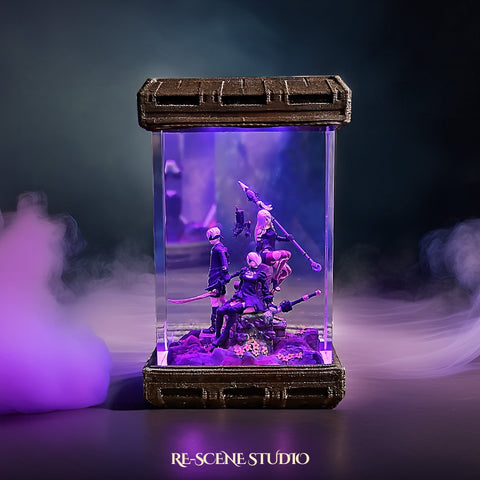
Every lamp we create carries a piece of our heart: a small universe of light, resin, and imagination, handcrafted in our workshop for someone across the world who shares our love for these stories.