



Witch Hat Atelier: Your Guide Before the Anime

Witch Hat Atelier might be the most beautiful manga ever drawn. Now it's becoming an anime, and you need to be ready.
That's not hyperbole. Kamome Shirahama's series has spent nearly a decade earning that title one painstaking panel at a time, building a devoted following of readers who pass dog-eared volumes to friends with the kind of quiet urgency reserved for things that genuinely change how you see art. The Spring 2026 anime premiere is one of the most anticipated adaptations in years, and if you haven't read the manga yet, this is the guide that gets you up to speed. If you have read it, this is the deep-dive you've been waiting for.
This Witch Hat Atelier anime guide covers everything: the premise, the magic system, the characters, the art, and why this story resonates with readers in ways that most fantasy series never manage.
What Is Witch Hat Atelier?
Witch Hat Atelier (known in Japanese as Tongari Boushi no Atelier, or "Pointed Hat Atelier") is a fantasy manga written and illustrated by Kamome Shirahama. It began serialization in Kodansha's Monthly Morning Two in July 2016 and has since grown to thirteen volumes, with more on the way. The English release is published by Kodansha USA, and every volume has been a consistent bestseller in the manga charts.
The story follows Coco, a young girl living in a world where magic exists but is treated as a birthright reserved for those born into witch bloodlines. Outsiders can only watch. Coco has always dreamed of becoming a witch, a dream she's quietly accepted as impossible until she witnesses the reclusive witch Qifrey performing magic in secret. She sees that magic isn't innate talent at all. It's knowledge. Specifically, it's drawing the right symbols in a special ink called Witch Ink.
What follows Coco's discovery sets the entire story in motion. In a moment of desperate curiosity, she attempts a spell she doesn't fully understand, with consequences that force Qifrey to take her on as an apprentice to help undo what she's done. Coco enters a hidden world of witch ateliers, apprentice witches, ancient laws, and a shadowy organization called the Brimhats who traffic in forbidden magic. The series is warm, thoughtful, and quietly dangerous. It never stops asking difficult questions about who gets to hold power, and why.
Shirahama began the series while working as a professional illustrator and comic artist in both Japan and the United States. Her work on DC's Zatanna variant covers and her deep familiarity with European illustration traditions show on every page of Witch Hat Atelier. The series won the 44th Kodansha Manga Award in the general category in 2020, and multiple volumes have appeared on the New York Times manga bestseller list.
The Magic System That Changes Everything

Most fantasy series treat magic as a system you either have or you don't. You're born with the gift, you inherit the bloodline, you survive the ordeal. Witch Hat Atelier's magic system is fundamentally different, and that difference is the beating heart of the entire story.
In Shirahama's world, magic is performed by drawing glyphs called sigils using a special Witch Ink that reacts to the physical markings made on surfaces or in the air. The glyphs are precise, rule-governed, and learnable. Anyone can theoretically perform magic if they know the right symbols and can draw them accurately enough. This is the secret that witch society has spent centuries protecting, because if common people understood how magic actually worked, the entire social structure that separates witches from non-witches would collapse overnight.
The magic system is internally rigorous in a way that rewards close reading. Sigils have base components that can be combined and modified. Layering glyphs creates compound effects. Drawing them incorrectly, or combining incompatible elements, produces dangerous or catastrophic results. This is why there are Forbidden Spells: not spells that are inherently evil, but combinations and techniques so complex or volatile that they've been classified as too dangerous for any witch to attempt. The Brimhats, the story's antagonists, aren't simply power-hungry villains. They're witches and outsiders who believe the Forbidden Spells represent knowledge that should be shared, not locked away. Their motivation is genuinely complicated, and Shirahama never lets you forget it.
For anime fans accustomed to power systems built around raw energy, special bloodlines, or training montages, Witch Hat's system is a revelation. Magic here is closer to engineering or calligraphy than to superpower activation. The drama comes from precision under pressure, from understanding the rules well enough to bend them, and from the ethical weight of who gets to learn them at all.
Meet the Characters

Coco is the kind of protagonist you don't see often enough. She's not the chosen one. She's not secretly powerful. She's curious to the point of recklessness, genuinely kind without being saintly, and she makes mistakes that have real consequences she has to live with. Her character arc is about earning her place rather than claiming a destiny, and that distinction makes every bit of her progress feel meaningful.
Qifrey is Coco's teacher, and he's immediately one of the most intriguing mentor figures in recent fantasy manga. He's warm and encouraging with his apprentices, but there are things he clearly hasn't told anyone. His past connects to the Brimhats in ways that slowly unravel across the series. He's not a villain, but he's not uncomplicated either, and that ambiguity keeps his every appearance charged with tension.
Qifrey's atelier houses three other apprentices before Coco arrives. Agott is focused, blunt, and initially hostile to Coco's presence, because Agott has worked her entire life for her skills and resents the implication that someone who stumbled into magic might belong alongside her. Her arc is one of the most satisfying in the series. Tetia is warm and socially intuitive, the emotional anchor of the apprentice group, and sharper than she first appears. Riche is quieter and more cautious, with a family background that gives her a complicated relationship with witch society's rules.
The Brimhats deserve mention as among the best-written antagonists in current manga. Their leader, Degasas, operates with a kind of patient conviction that's far more unsettling than rage. Different Brimhats have different reasons for opposing the witch establishment, and Shirahama is careful to show that some of those reasons are genuinely sympathetic. The series refuses to let you hate them cleanly, which is exactly the right choice.
The Art Style and Why It Matters

Kamome Shirahama's art is, without exaggeration, some of the most accomplished work being produced in manga today. Her linework is meticulous in a way that reads as effortless, which is the hardest kind of craft to achieve. Every page of Witch Hat Atelier is dense with detail: architectural filigree, fabric textures, background environments that are fully realized whether or not a character stands in front of them.
Her primary influence is European illustration rather than the mainstream manga aesthetic. She cites artists like Arthur Rackham and the tradition of fairy-tale illustration that shaped children's books across Britain and Germany in the early twentieth century. You feel it in the way she draws forests (layered, slightly ominous, alive with implied depth), in her architectural choices (medieval European rather than feudal Japanese), and in the clothing design (layered, historically textured, with every apprentice's hat and cloak a reflection of their personality).
The panel composition is also worth studying. Shirahama regularly uses full-page and double-page spreads not just for action climaxes but for moments of quiet wonder: Coco seeing a sigil form for the first time, a workshop lit by glowing ink, an outdoor magic demonstration. She treats stillness as worthy of the same visual grandeur as combat. It's a pacing philosophy that runs counter to most shonen action series and feels more aligned with literary graphic novels.
This is also why the anime adaptation is both exciting and genuinely challenging. The studio responsible faces the task of moving Shirahama's static, illustration-dense pages into motion without losing the weight and texture of the original. The production design alone will be one of the most closely watched aspects of the Spring 2026 premiere.
If you're drawn to the art style, it's worth looking at our breakdown of the hidden visual details in Studio Ghibli films. Shirahama's use of environmental storytelling sits in the same tradition as Miyazaki's approach to background design, and understanding one deepens your appreciation of the other.
The Art Style Also Inspired the Lamps You'll Want to Read By
There's a particular kind of reading experience that Witch Hat Atelier demands. You can't rush it. The art requires time, and so does the story. A reader who skims will miss sigil compositions embedded in backgrounds, will lose the visual rhymes Shirahama builds across volumes, and will simply enjoy the book less. This is manga you sit with.
That means the light you read by actually matters. Harsh overhead lighting flattens the page and creates eye fatigue on cross-hatched detail work. The warm, directed glow of a softer light source is better. It's not accidental that Witch Hat Atelier's palette runs on candlelight and warm amber. Shirahama's world is designed to be read by lamplight.

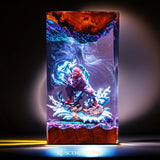
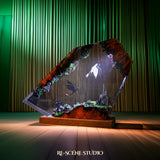
Our Howl's Moving Castle Resin Lamp was handcrafted by our artisan workshop to capture exactly that kind of light: the warm, slightly otherworldly glow of a fantasy world where magic is woven into everyday objects. Howl's world shares DNA with Coco's. Both are European in sensibility, both treat craftsmanship as sacred, and both are suffused with the sense that the world is older and stranger than any one character knows. Reading Witch Hat Atelier by that light hits differently.

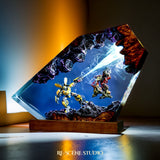
The Haku Resin Lamp is another good companion for this kind of reading. Its cool, translucent glow is suited to late-night sessions with detailed art, and Spirited Away's atmosphere of a child navigating a hidden world that operates by its own ancient rules is thematically closer to Witch Hat Atelier than you might expect. Our 2026 anime desk setup guide has more ideas for building a reading and display space around this kind of ambient lighting.
Witch Hat Atelier vs. Other Fantasy Anime

Spring 2026 is a crowded season for fantasy anime. Witch Hat Atelier arrives alongside ongoing juggernauts and fresh adaptations, so it's worth putting it in context for viewers trying to decide where to spend their attention.
| Series | Magic System | Tone | Art Style | Core Themes | Manga Volumes |
|---|---|---|---|---|---|
| Witch Hat Atelier | Ink sigil drawing, rule-based, learnable by anyone | Quiet wonder, slow-burn tension, ethically complex | European illustration, detail-dense, Rackham-influenced | Knowledge as power, consent, disability, who belongs | 13+ volumes |
| Frieren: Beyond Journey's End | Conceptual mastery; understanding the "image" behind a spell | Melancholic, reflective, quietly funny | Clean lines, expressive characters, soft backgrounds | Memory, grief, what makes a life meaningful | 14+ volumes |
| Mushoku Tensei: Jobless Reincarnation | Energy-based, practiced through repetition, innate talent matters | Epic, occasionally dark, action-forward | Studio Bind's fluid, high-budget animation polish | Redemption, ambition, consequence of power | 26+ volumes (LN) |
| The Apothecary Diaries | No magic; knowledge-based problem solving via medicine and observation | Witty, investigative, court intrigue | Elegant period detail, rich color design | Intelligence vs. status, women in power, curiosity | 13+ volumes |
The honest comparison is that Witch Hat Atelier sits closest to Frieren in tone: both are series where the emotional payload is delivered quietly, where patience is rewarded, and where the world feels genuinely lived-in rather than constructed for action sequences. But Witch Hat is more politically textured than Frieren, more focused on systems of power and who they exclude. It will likely appeal to the same audience, and viewers who loved Frieren's pace and craft should move Witch Hat to the top of their Spring 2026 list.
How to Prepare for the Anime
The single best preparation is to read the manga. That's not a gatekeeping recommendation. It's practical: the anime will not have the time to recreate the density of Shirahama's visual storytelling, and readers will catch background details, sigil compositions, and character expressions that anime-only viewers will inevitably miss in motion. The first two or three volumes are widely available through Kodansha's digital platforms, physical bookshops, and public library systems.
If you're coming in anime-only, go in without expectations shaped by other fantasy series. Don't expect Demon Slayer-style combat sequences, dramatic power-ups, or a villain hierarchy built around raw strength. The pacing is deliberate. The first few episodes will likely spend significant time in the atelier, establishing the magic system's rules and Coco's relationships with the other apprentices. This is exactly the right choice, and resisting the urge to want it to move faster will make the eventual tension sequences hit significantly harder.
It's also worth checking whether the studio releasing the adaptation has revealed details about its production design approach. The visual language choices they've made for backgrounds, ink animation, and sigil rendering will tell you a great deal about how faithful and how ambitious the adaptation aims to be. For more on building the right context for discovery series like this one, our piece on adult anime collecting and where to start covers the broader landscape of series worth following in 2026.
Why This Series Resonates with Adults

Witch Hat Atelier has built its readership predominantly among adults in their twenties and thirties, a demographic that tends to be selective about fantasy and skeptical of stories that paper over their own implications. The series earns that readership through a willingness to follow its central premise to genuinely uncomfortable places.
The magic system's central conceit, that knowledge is deliberately withheld from the many to preserve the status of the few, is not played as a backdrop. It's the story's primary political argument. Coco's journey isn't just about learning to draw sigils. It's about what it means to hold knowledge someone else decided you weren't allowed to have, and what responsibilities come with it once you do. The Brimhats aren't wrong about the injustice. They're wrong, in Shirahama's framing, about the method. That's a more sophisticated ethical position than most fantasy series bother to articulate.
The series also handles disability in a way that's unusual for the genre. One of the later apprentices Coco encounters has a physical condition that affects their ability to perform certain magic, and Shirahama treats this not as a limitation to overcome through sheer will but as a design problem requiring creative rethinking of how the magic system itself accommodates different bodies. It's a small arc in a larger story, but it's handled with care that readers notice.
There's also the matter of craft itself as a value. The atelier is a place where skill is built slowly, where mistakes carry weight, and where there are no shortcuts. In a media landscape full of power-scaling and shortcuts to strength, a story that treats the careful accumulation of skill as inherently dramatic feels genuinely countercultural. If you're drawn to that sensibility in fiction, the series will feel like it was written for you specifically. For those who collect thoughtfully across series, our guide to adult anime collecting covers the broader mindset behind building a collection around series with this kind of depth.

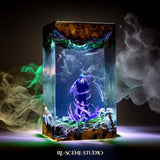
The adult audience that Witch Hat Atelier has cultivated tends to be the same audience drawn to Coraline's world: European in visual sensibility, quietly unsettling beneath a surface of wonder, and deeply concerned with the gap between how things appear and what they actually are. Our Coraline Resin Lamp, handcrafted by our artisan workshop with the same attention to detail that Shirahama brings to her linework, sits naturally in the kind of space where someone reads this series. Browse the full handcrafted lamp collection if you're building a reading corner that matches the world Coco inhabits.
Frequently Asked Questions
Featured Resin Lamps
Handcrafted with care, each one unique
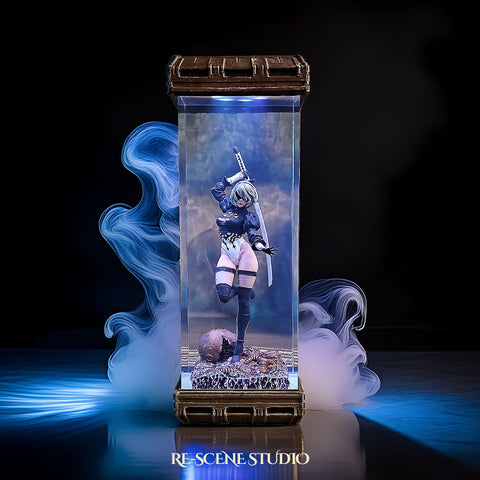
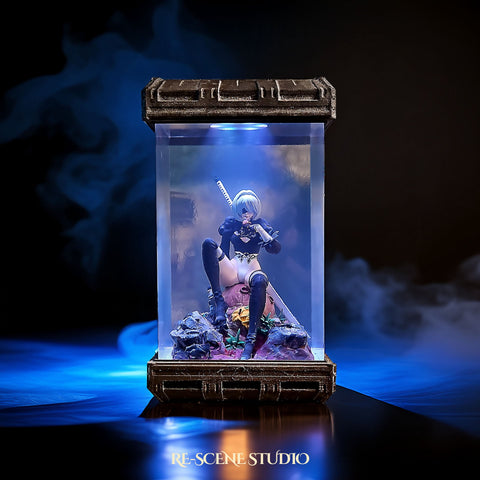
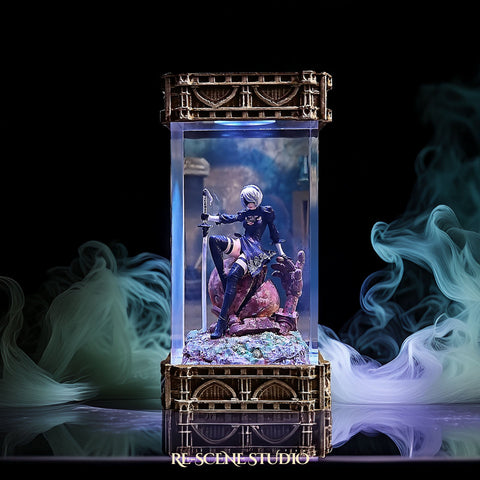
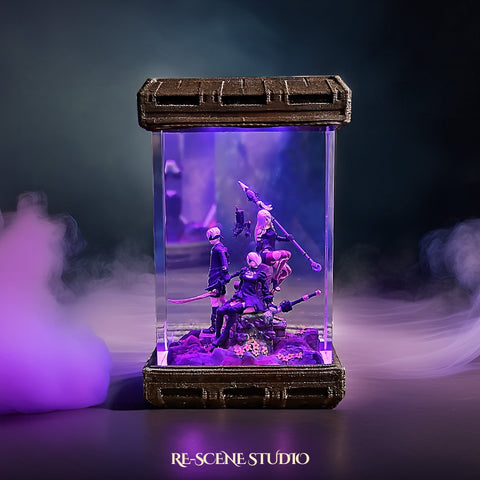
Every lamp we create carries a piece of our heart: a small universe of light, resin, and imagination, handcrafted in our workshop for someone across the world who shares our love for these stories.