


![[FATHER'S DAY] Ember Glow Ticket | $6.68 — Handcrafted Epoxy Resin LED Lamp | Unique Ambient Decor & Collector's Gift](http://rescenestudio.com/cdn/shop/files/Lucky_Star_Ticket_NYE_2026_c61361fc-ea06-4a31-8379-e16ed7d47902.jpg?v=1767177179&width=320)


Dinosaurs in Your Living Room: Why Prehistoric Decor Is Trending

Prehistoric decor has grown up. The dinosaur art trending in 2026 has nothing to do with cartoon Triceratops or bright plastic T-Rex toys. We are talking museum-quality fossil replicas, dramatic prehistoric landscape prints, fossilized ammonite slices as wall art, and handcrafted sculptures that capture the ancient world with the same artistic seriousness as any abstract piece. Across Pinterest, interior design communities, and home collections featured in publications like Architectural Digest, prehistoric-themed decor is showing up in spaces that are anything but childish.
The question most adults ask when they discover this trend is a reasonable one: can I pull off prehistoric decor without my home looking like a natural history museum gift shop? The answer is yes, and this guide shows exactly how. From understanding the aesthetic principles behind the trend to discovering handcrafted pieces that bridge the prehistoric world and contemporary design, here is everything you need to bring the ancient world into your living space with intention.
Why Prehistoric Decor Is Having a Moment
Several cultural forces are converging to make prehistoric aesthetics relevant to adult home design in 2026. The first is a broad interest in natural history that has been building for years, accelerated by blockbuster documentary series, the renewed popularity of paleontology as a science communication topic, and the cultural impact of films and gaming that take prehistoric creatures seriously as awe-inspiring subjects rather than monsters or children's entertainment.
The second force is the broader biophilic design movement. Designers and homeowners alike are reaching for objects that connect them to the natural world, and nothing represents deep time and the power of nature more vividly than fossils and prehistoric imagery. A genuine ammonite fossil on a shelf is not just decorative. It is a direct connection to an organism that lived 65 million years ago. That specificity, that realness, carries a weight that mass-produced decorative objects simply cannot replicate.

The third force is a generational one. The adults driving home decor purchases in 2026 grew up with Jurassic Park, with a golden era of dinosaur science communication that made paleontology genuinely exciting, and with a cultural framing of prehistoric creatures as objects of awe rather than just children's toys. Those adults are now old enough to have their own homes and their own design sensibilities. Prehistoric decor, done right, is a natural expression of interests they have held for decades.
The Aesthetic Principles: How to Get This Right
Successful prehistoric decor in an adult home operates on a few key principles. The first is restraint. One strong prehistoric piece anchors a room far more effectively than five competing ones. A beautifully mounted fossil replica above a fireplace. A single dramatic print of a prehistoric seascape on a dark feature wall. One handcrafted sculpture of an ancient creature on a styling shelf. Restraint is what separates a considered collection from a theme park.
The second principle is material quality. The prehistoric pieces that look stunning in adult interiors share a common characteristic: they look handmade or scientifically authentic. Cheap plastic replicas read immediately as children's decor regardless of size. But a fossil cast in heavy resin with accurate textures and subtle coloring reads as a collectible object. A prehistoric creature preserved in clear or amber-toned resin, with visible texture and depth, occupies a completely different visual category.
The third principle is color palette alignment. Prehistoric decor works best alongside warm earthy tones: dark browns, amber, deep olive green, slate grey, and ochre. These are the colors of fossils, ancient rock strata, and the landscapes that define our visual imagination of the prehistoric world. If your existing room palette skews cool or bright, prehistoric pieces will feel incongruous. If it skews warm and earthy, they will feel inevitable.
The Ancient Dinosaur Resin Lamp: Where Prehistoric and Contemporary Meet
Handcrafted resin art has become one of the most compelling ways to bring prehistoric imagery into a contemporary space. The medium is particularly well-suited to the subject: resin captures texture and depth in a way that makes prehistoric creatures feel genuinely preserved rather than decorative, and when lit from within, it transforms the object into a luminous focal point that works day and night.

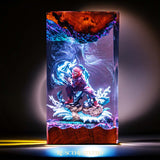
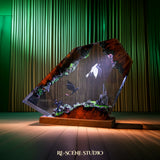
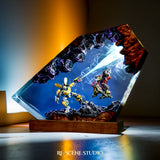
The Ancient Dinosaur Resin Lamp from our workshop captures a prehistoric skeleton suspended within translucent layers of hand-poured resin. No two pieces are identical because each is handcrafted by our artisan workshop, meaning the depth and coloring of the resin varies slightly from piece to piece. When lit, the warm internal glow illuminates the prehistoric detail from within, creating an amber light effect that suits any earthy, nature-forward interior. It sits naturally on a study desk, a bedroom nightstand, or a living room shelf as a statement object that bridges the ancient world and modern design.
For those who want the same prehistoric aesthetic in a different palette, the Blue Ancient Dinosaur variant explores the same skeletal detail through a cooler, deep-ocean-toned resin. The blue coloring evokes prehistoric marine environments rather than terrestrial landscapes, making it a strong choice for rooms with a more aquatic or deep-sea design direction.

Bringing the Ice Age Indoors: The Frozen Mammoth
The prehistoric story extends well beyond the Mesozoic era of dinosaurs. The Ice Age and its megafauna, woolly mammoths, cave lions, giant ground sloths, have their own design language: thick fur texture, cold blue and white tones, and a sense of ancient frozen drama that suits a completely different interior palette from the warm amber of dinosaur fossils.

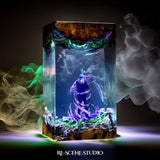
The Frozen Mammoth Resin Lamp captures a mammoth figure within resin layers that evoke glacial ice and Arctic cold. The effect is of a creature preserved in time, the exact quality that makes genuine Ice Age fossils so compelling to paleontologists and natural history enthusiasts alike. In a design context, this piece works beautifully in rooms with cooler palettes: slate blue walls, white oak furniture, grey linen textiles. It also serves as an unexpected conversation piece in a warmer space, where the contrast between its cool tones and surrounding warmth creates visual tension that keeps the eye moving.

How to Style a Prehistoric Corner
The most effective approach to prehistoric decor in an adult home is to create a deliberate "zone" rather than scattering pieces throughout the space. A dedicated shelf, alcove, or side table arrangement gives the prehistoric elements room to breathe and establishes them as a curated collection rather than random objects. Think of it the way a museum designs a specific gallery: focused, intentional, and coherent.
For a warm prehistoric shelf, combine a resin lamp with a genuine or cast ammonite fossil, a stack of natural history or paleontology books as a visual base, a small sculptural piece in terracotta or slate, and perhaps a few dried botanical elements. The combination of scientific seriousness and warm materiality is what makes prehistoric decor land as sophisticated rather than novelty. Keep the background dark: a deep green, charcoal, or dark wood shelf dramatically improves how prehistoric objects read visually compared to light or white backgrounds.
Prehistoric Decor vs. "Dino Nursery": Understanding the Difference
| Element | Children's Dino Decor | Adult Prehistoric Decor |
|---|---|---|
| Color palette | Bright primaries, cartoon greens | Earthy ambers, deep browns, slate, blue-grey |
| Material quality | Plastic, vinyl, fabric prints | Resin, stone, cast metal, natural fossils |
| Subject treatment | Friendly, anthropomorphized creatures | Scientifically-grounded or artistically dramatic |
| Scale and placement | Repeated pattern, scattered | Single statement piece or curated cluster |
| Lighting integration | Daytime-only decor | Illuminated objects that work day and night |
| Reference points | Cartoon media, toy aesthetics | Natural history museums, fine art, paleontology |
The practical distinction is straightforward. Children's dinosaur decor is about familiarity and playfulness. Adult prehistoric decor is about scale, time, and awe. One references cartoon media; the other references natural history museums, fossil records, and the genuinely humbling scale of deep time. The same subject, executed through different aesthetic choices, lands in completely different places.
If you are drawn to prehistoric aesthetics and interested in more unusual creature-inspired decor, our guide on Godzilla through the ages explores how one of cinema's most iconic prehistoric-adjacent creatures has evolved as a design and cultural influence.
Frequently Asked Questions
Featured Resin Lamps
Handcrafted with care — each one unique


Every lamp we create carries a piece of our heart — a small universe of light, resin, and imagination, handcrafted in our workshop for someone across the world who shares our love for these stories.